

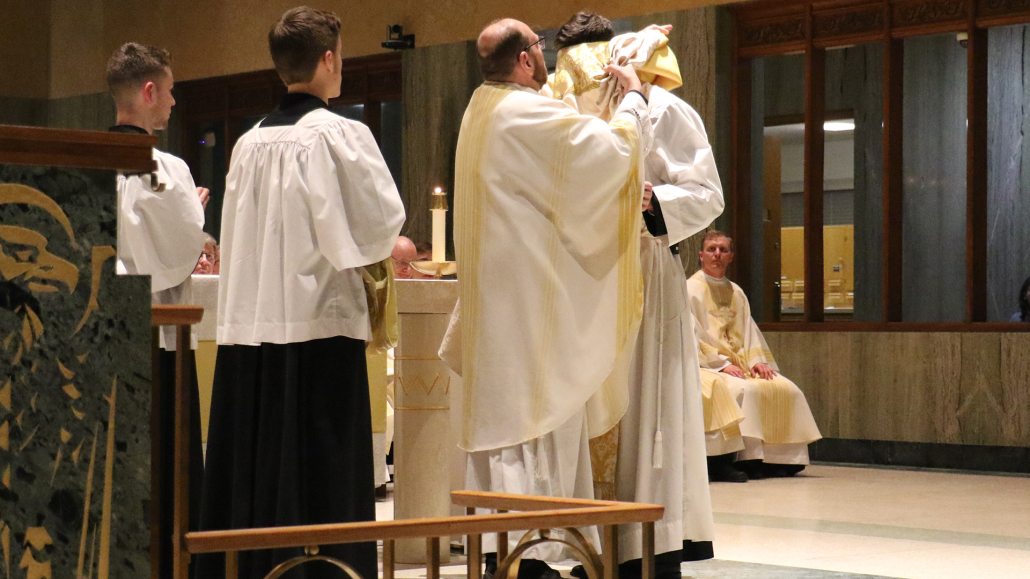
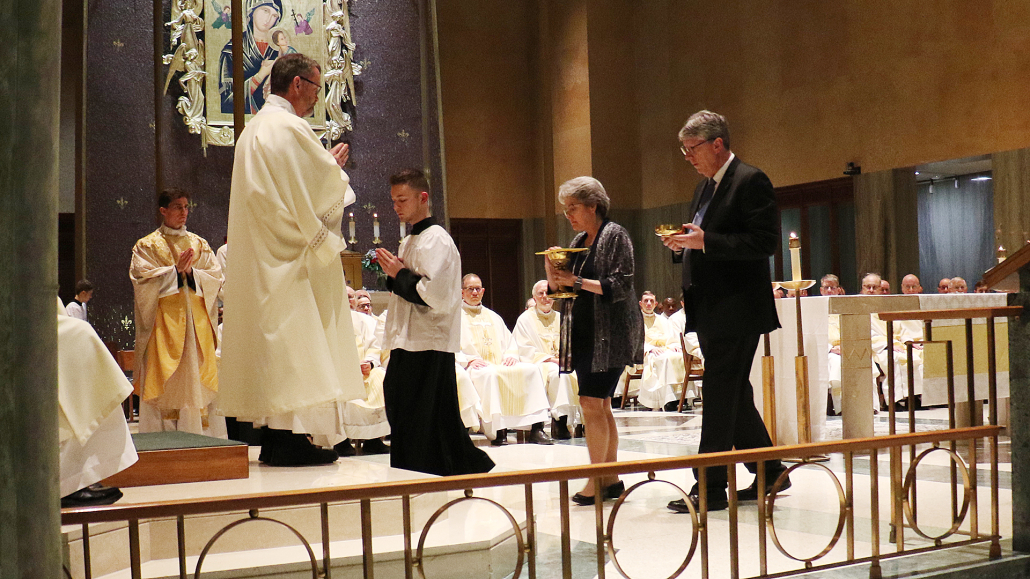
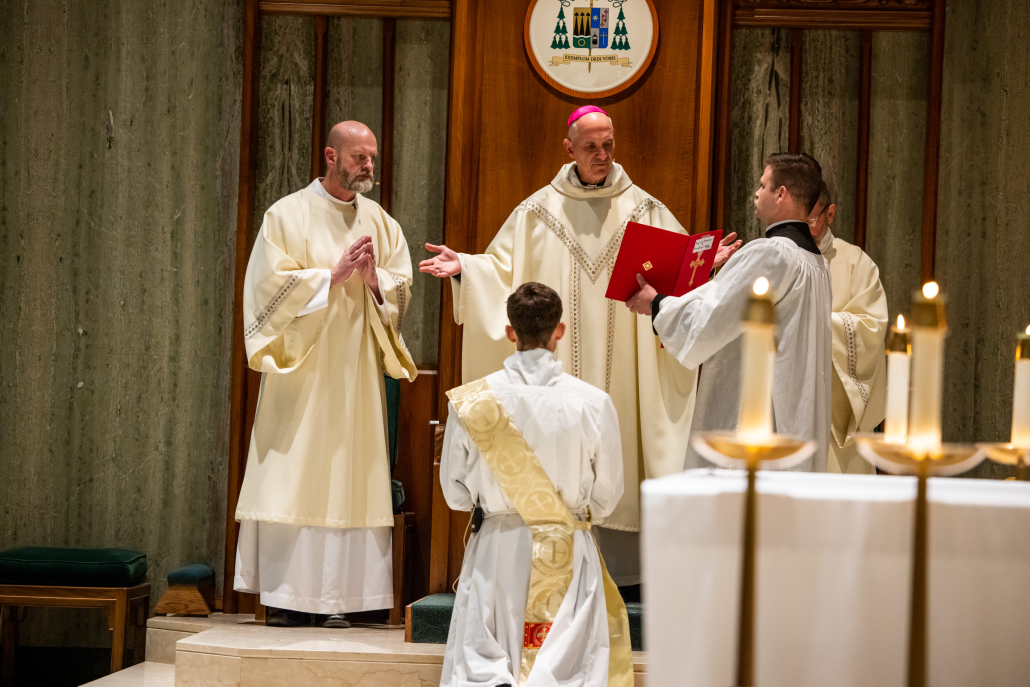
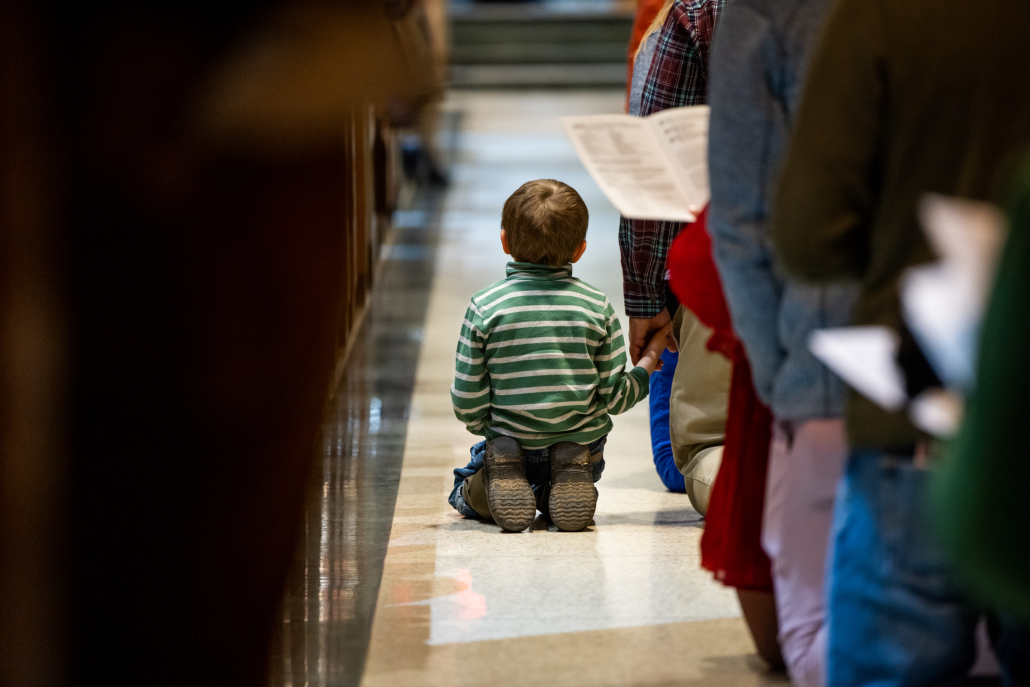
Photos from Mass
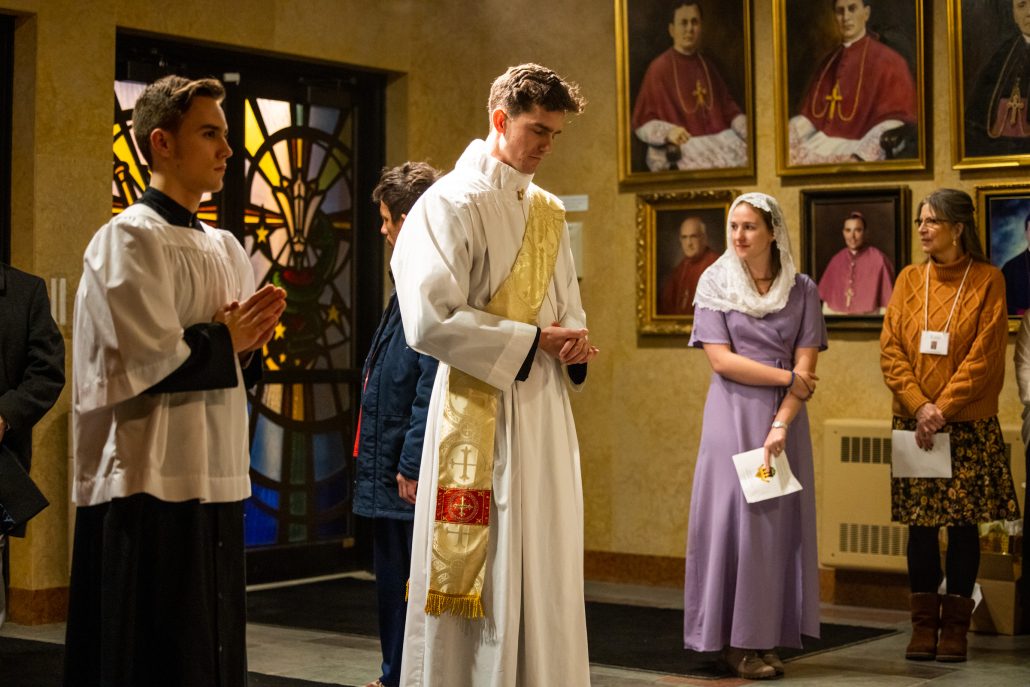
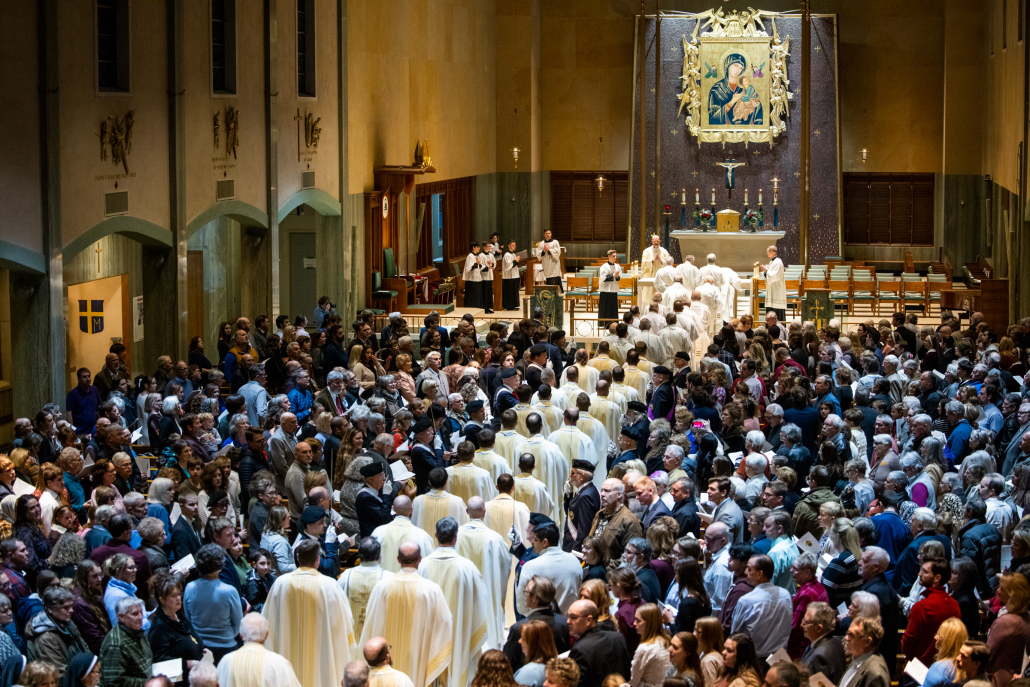
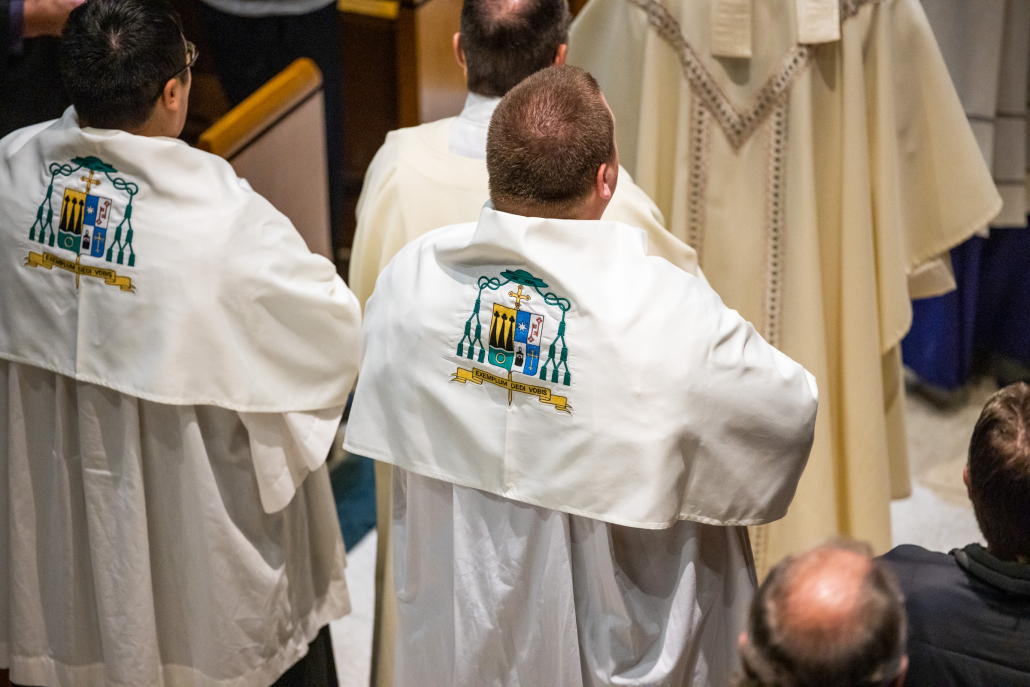
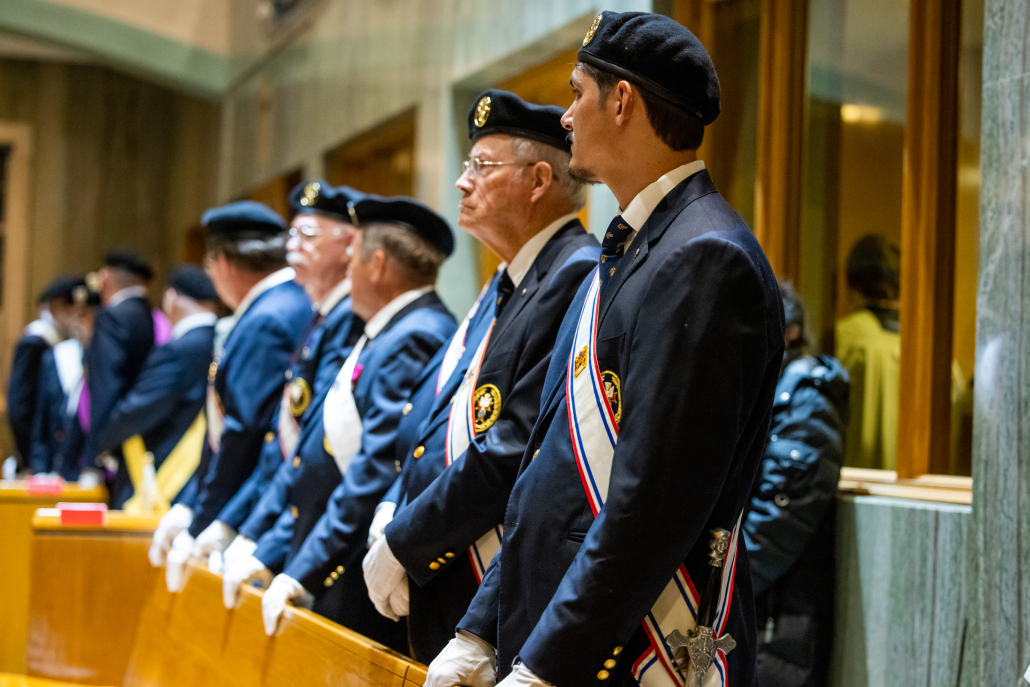
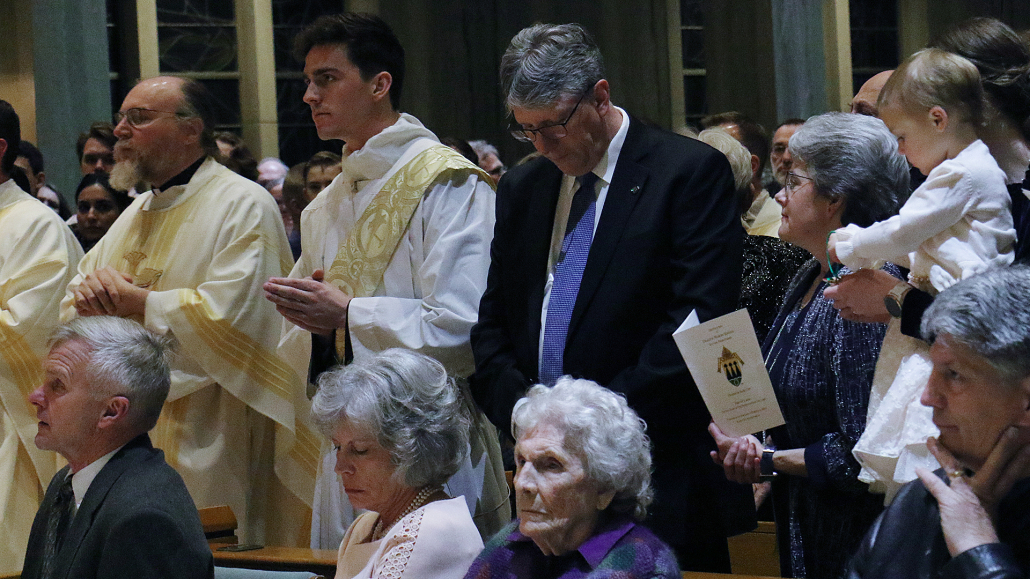
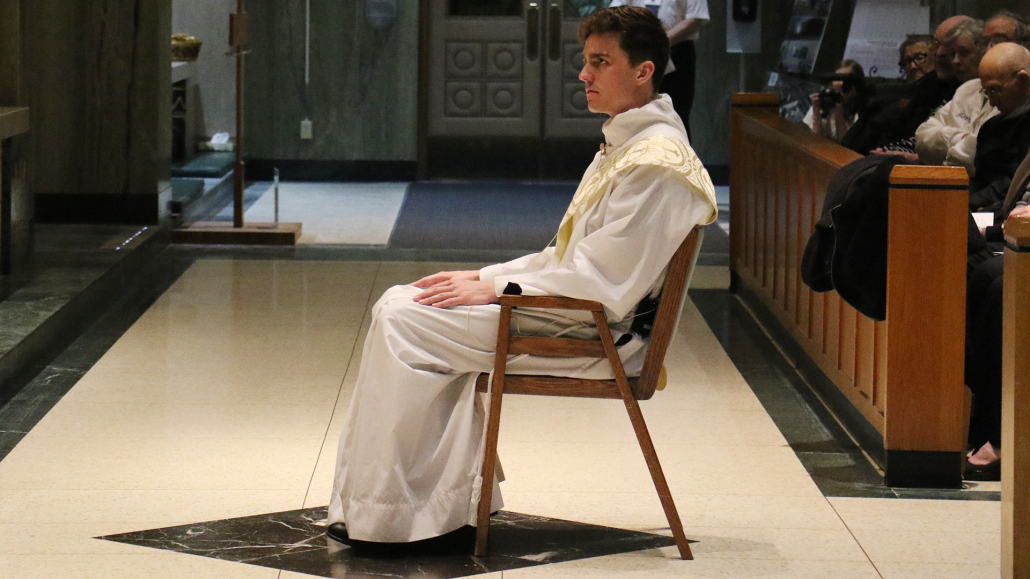
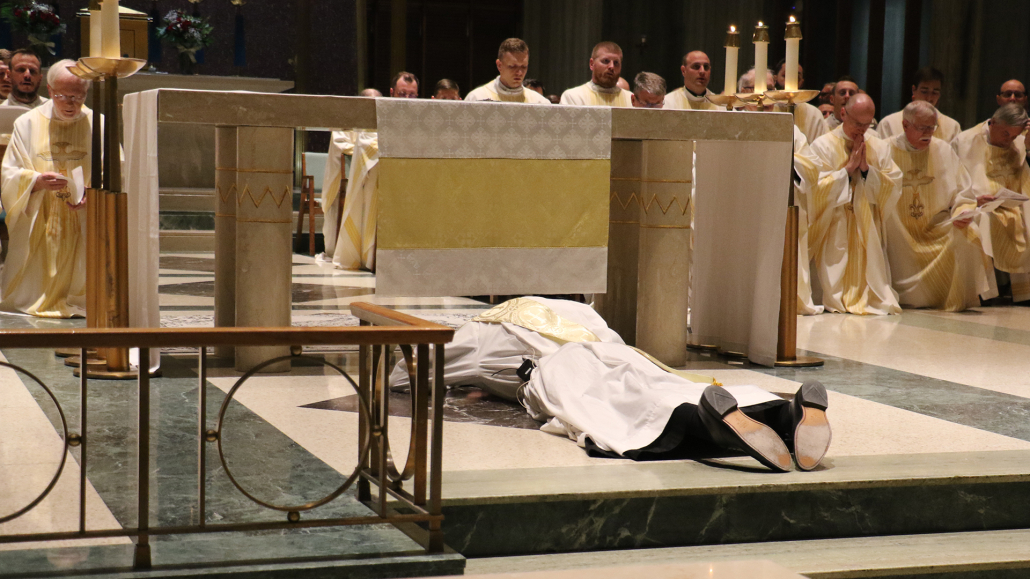
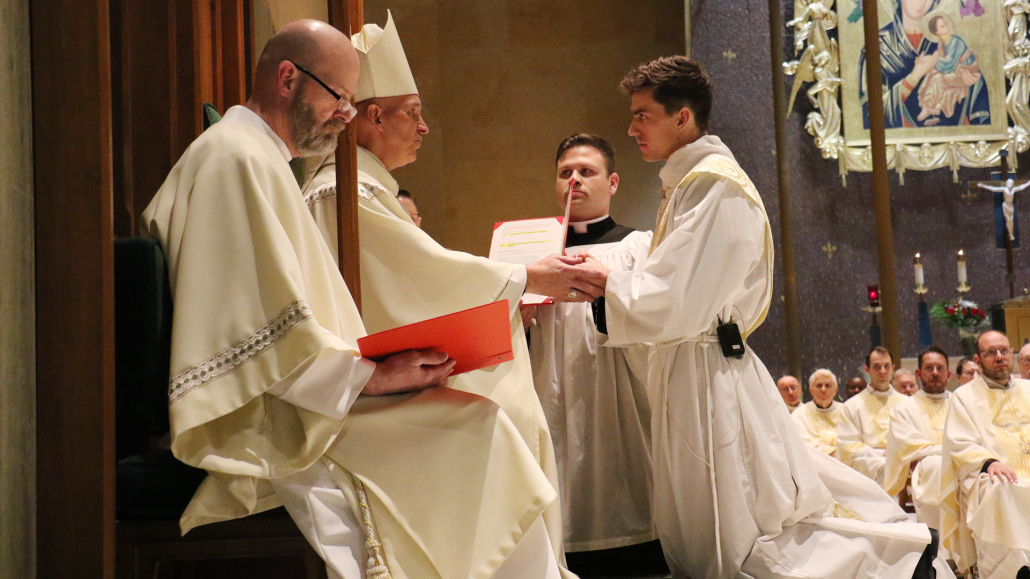
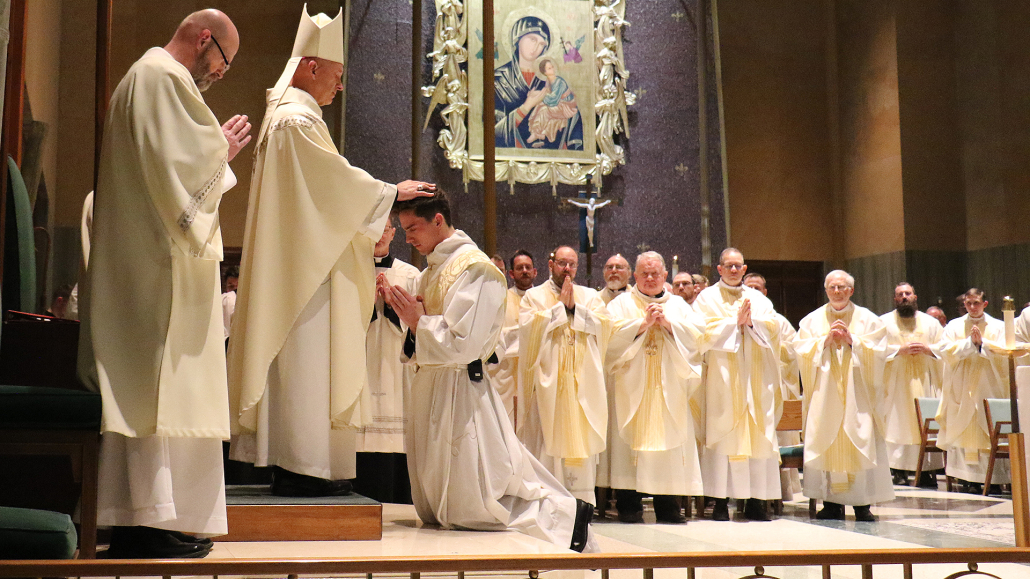

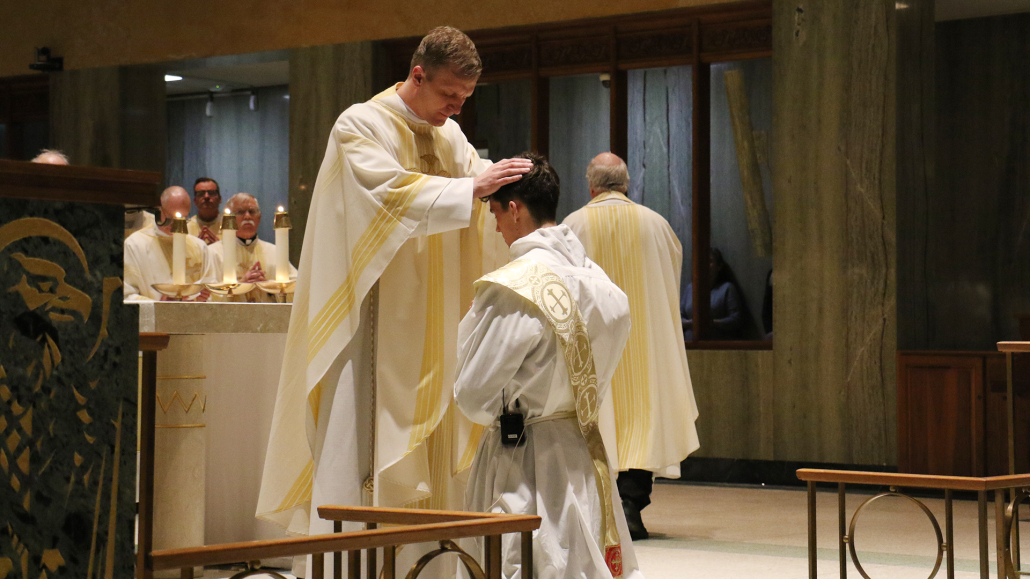
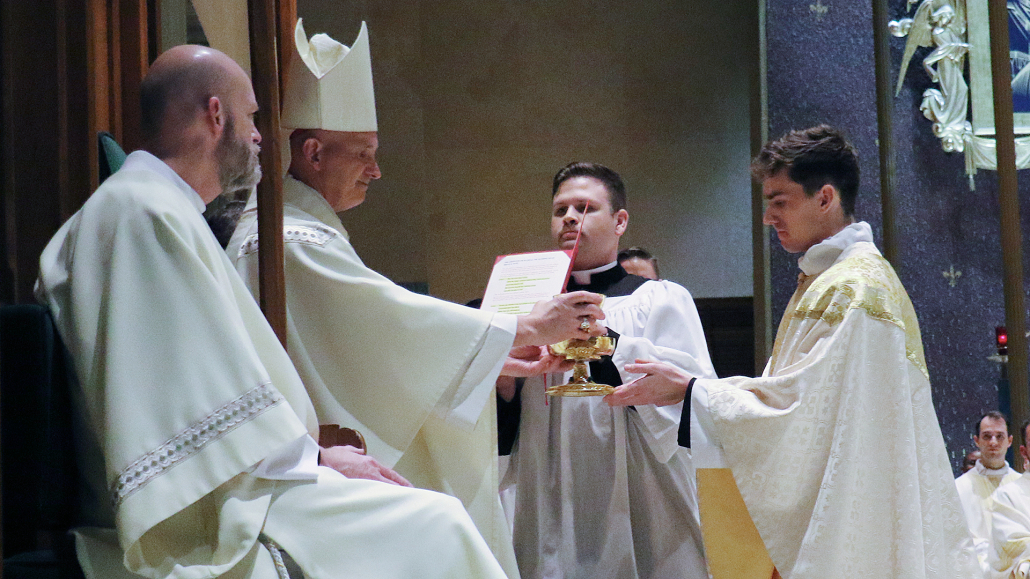
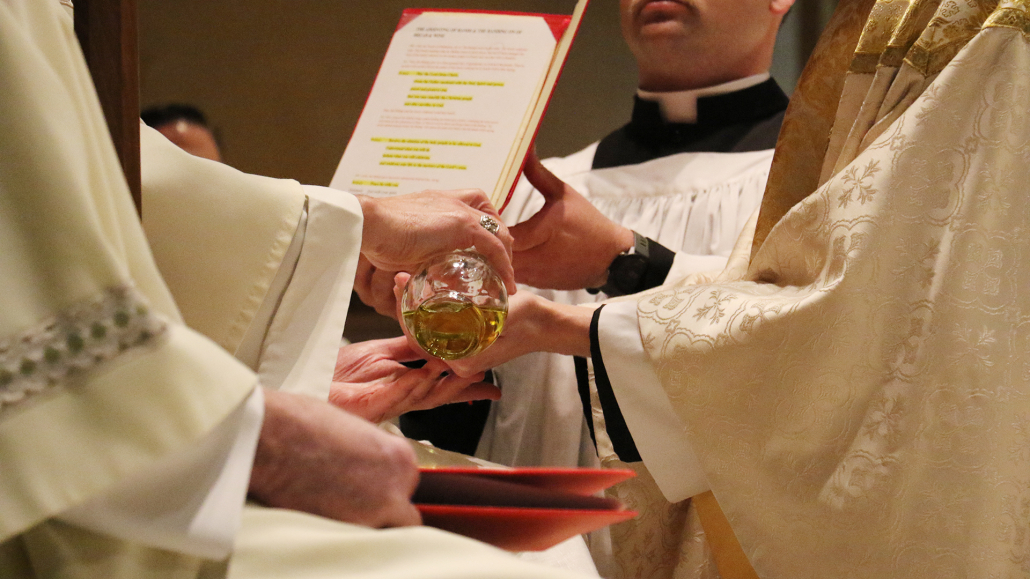
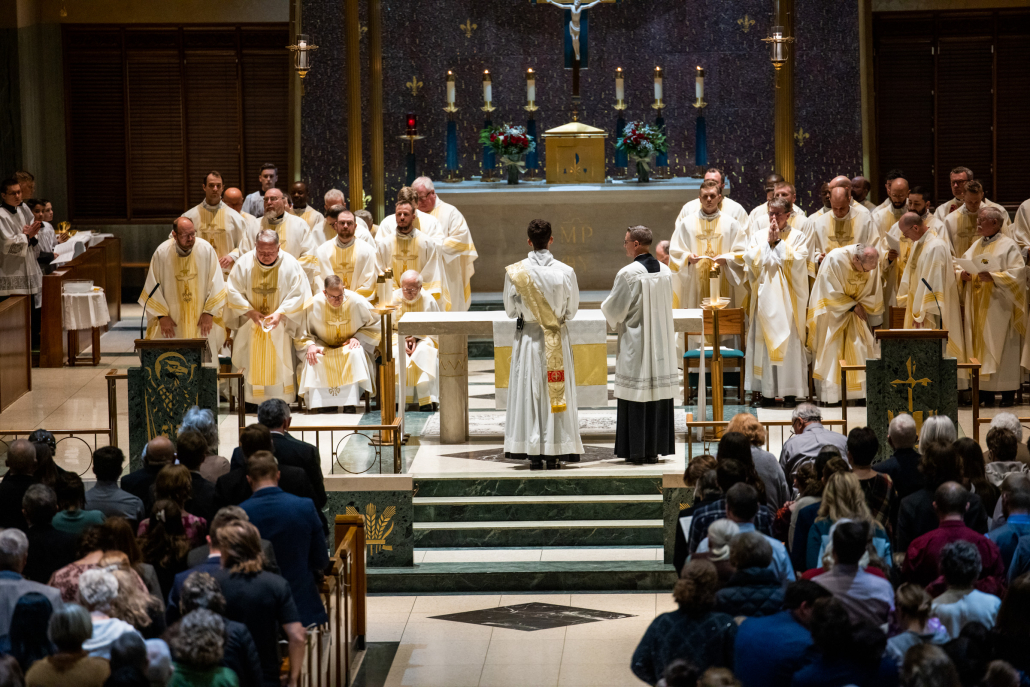
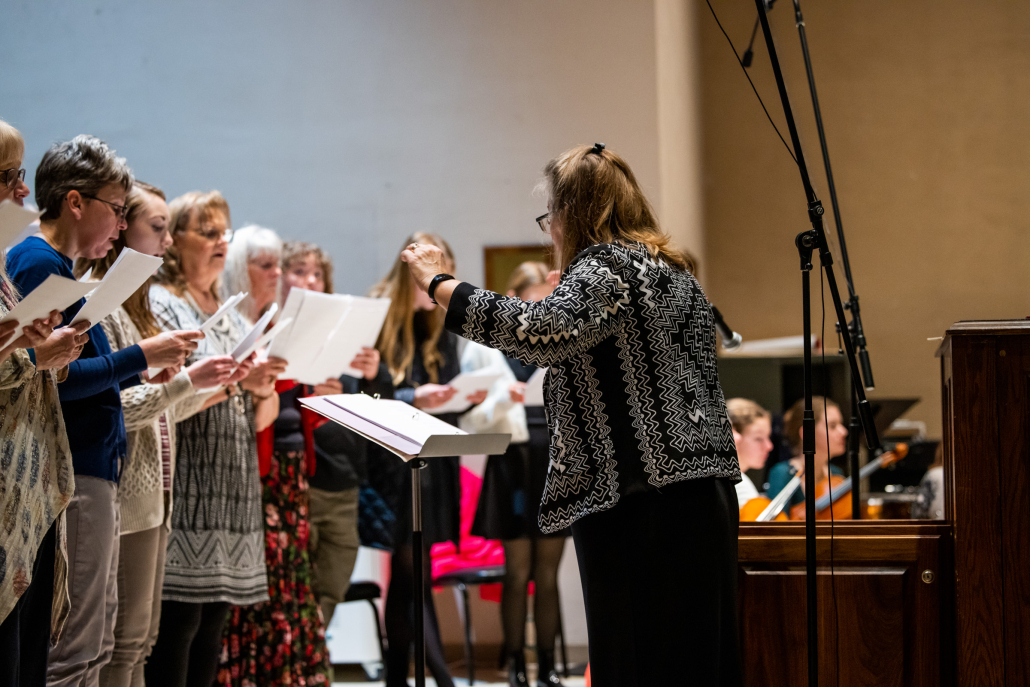

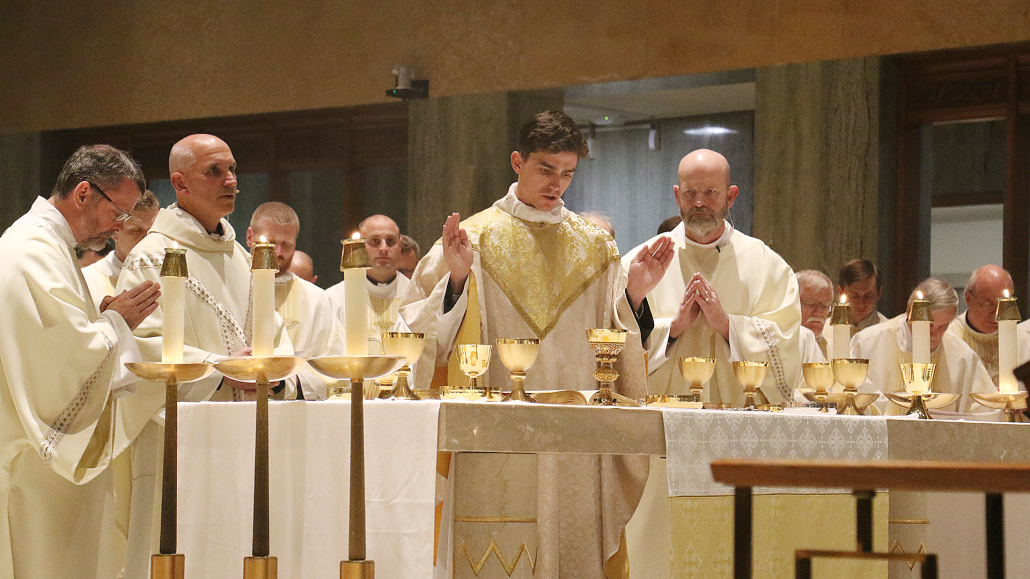
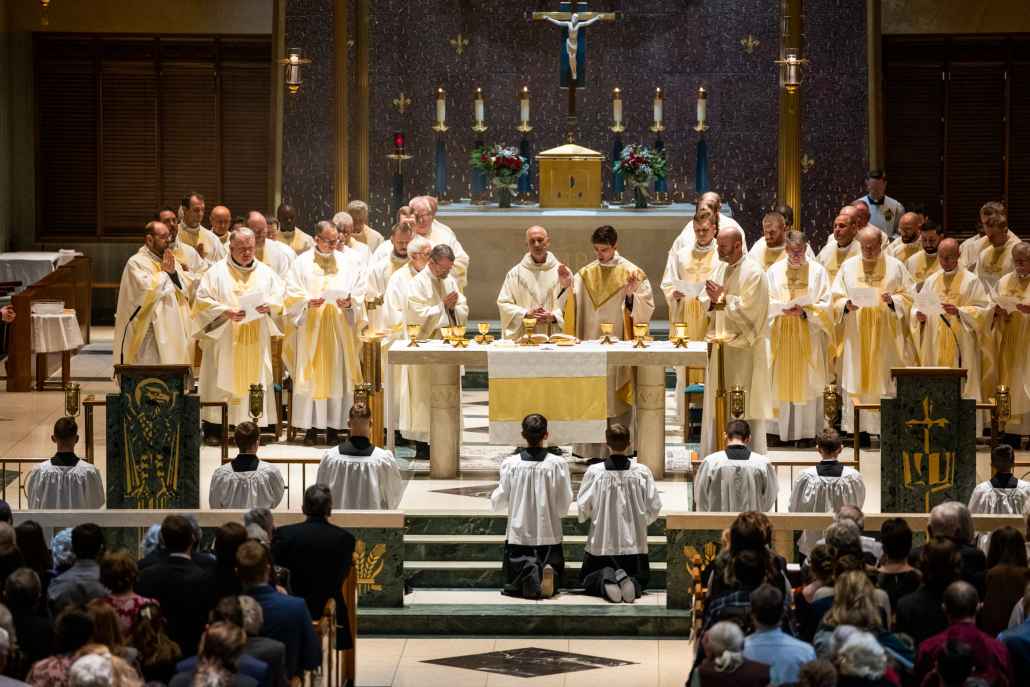
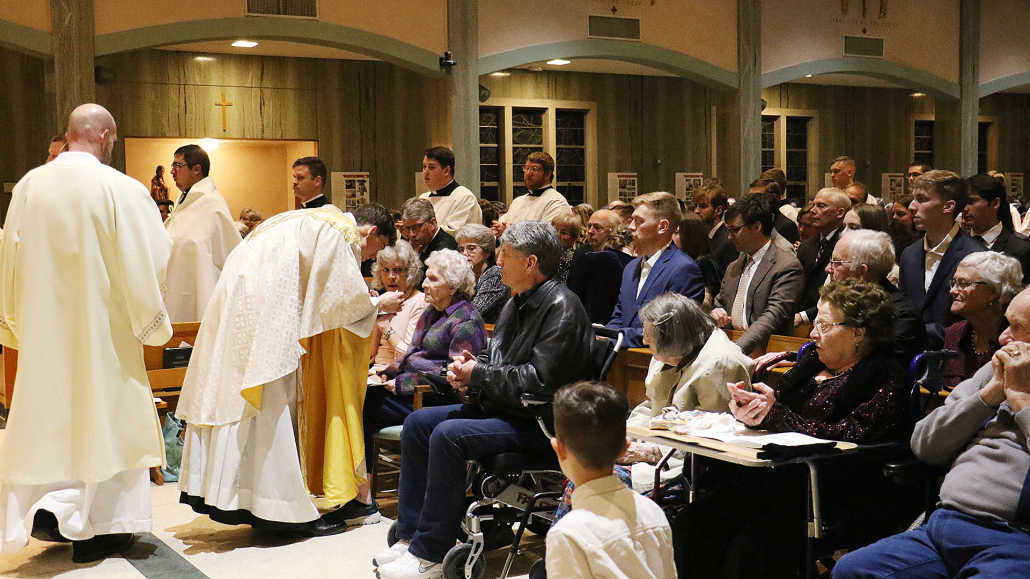
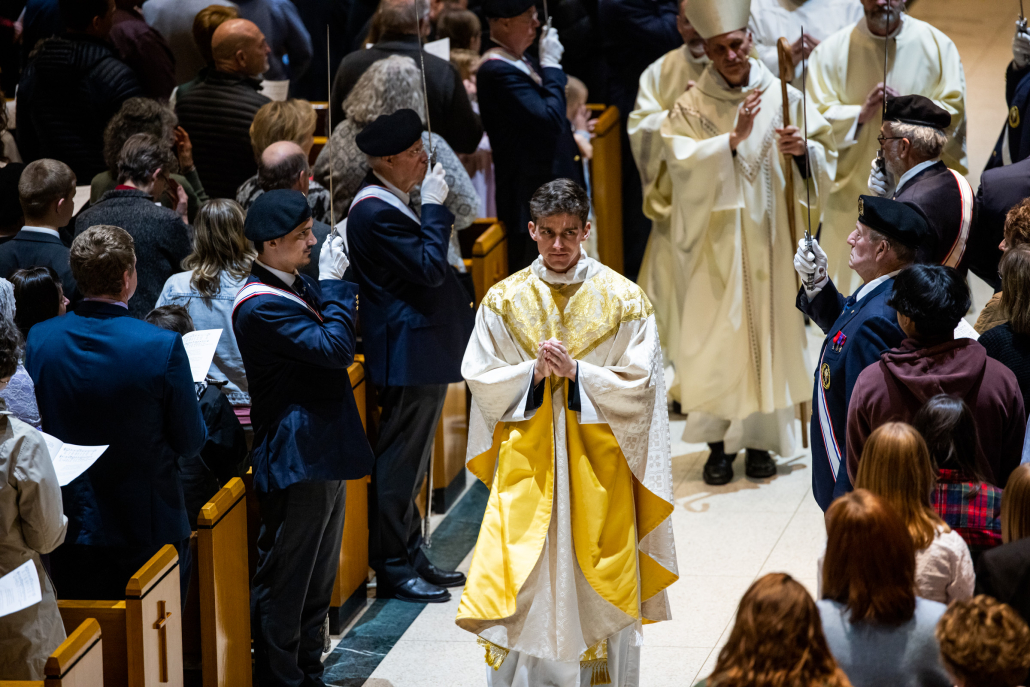
Hear Bishop Steven Biegler’s homily
Bishop Steven Biegler, Diocese of Cheyenne, Wyo.
Priestly Ordination of Robert Kinyon
February 2, 2024
Robert, I can imagine how you feel today because I remember how I felt on that day of priestly ordination. It’s a huge step, so trepidation is a good sign. I recall feeling like I was plunging into the unknown, not knowing what kind of sacrifice would be required. I think it’s much like a young couple stepping forward for marriage. They have little sense of how much sacrifice and dying to self is ahead of them.
Even though men spend years in the seminary preparing for priesthood, they still approach the altar barely understanding what lies ahead. Trepidation, plunging into the darkness, sacrifice beyond your imagination — those are good signs. You’re being a faithful disciple. Disciples take risks that put them in danger. That puts them in over their heads. That even might place them on the path of death.
In contrast, the person who lives a safe, risk-free life is stagnant in his journey of faith. Often, fear and anxiety hold him back. He might even find himself paralyzed. That person is living among the walking dead. Jesus said that those who wish to be safe will lose their lives. He said, “Anyone who wants to save his life will lose it. But anyone who loses his life for my sake will save it.”
If you feel like you’re stepping into the darkness beyond your control, that’s a good sign. If you have no idea how to bear the sacrifice ahead, you’re on the right path. That’s what the Paschal journey looks like.
So, how should you navigate the risky waters ahead of priestly discipleship? Keep fresh in your heart the experience of Peter after the resurrection that we heard in that Gospel story today. This is when it all came together for the disciples. Jesus had just eaten breakfast with them. The menu was familiar — fish and bread — but this time, Jesus served fish and bread with a twist. A creative twist — over a charcoal fire. As always, details like this have meaning that we need to pay special attention to.
A charcoal fire is only mentioned twice in John’s Gospel. Peter denied that he knew Jesus while sitting at a charcoal fire. He was playing it safe. Admitting that he was a disciple, that he knew Jesus, was risky. He chickened out in front of a slave girl when she asked him if he knew the Lord. At the second charcoal fire, Jesus looks Peter in the eyes with divine patience, firmly yet gently bringing that triple denial in front of him.
The breakfast has Eucharistic overtones. The risen Christ feeds them with his love, renewing their friendship. We don’t hear him say, “I know you failed me, but I still love you.” Instead, he feeds them with his love. With that bread and fish — signs of a steadfast love. Signs of his overflowing abundance life poured out that were prefigured in feeding the 5000.
Robert, in your reflection on the Gospel reading, you described this patient love. You wrote, “I’m deeply encouraged by the patience that our Lord has for Peter, and I have come to personally know this divine patience. Indeed, I feel that God has called me to be an official minister of this sacramental grace on account of my familiarity with his patience and mercy. A mercy that has met me within my limitations assured me of his love and led me beyond them to the service of others.”
This is essential to being a teacher like Jesus. The office of teaching that you assume is fulfilled by proclaiming the Gospel above all, the kerygma. Finding a thousand ways to proclaim the humble, gentle, patient love of Christ. Assuring people the Lord loves them unceasingly and forgives them without limit.
Sometimes, priests focus on the office of teaching with a strong denunciation of sin. While naming sin is important, it’s secondary. We can make people feel discouraged if we fail to first proclaim the love revealed on the cross. Often, homilies are loaded with moral imperatives, but they lack the proclamation of the Lord’s redeeming love. The preacher should place greater emphasis on how much God loves us then connect that to the moral life in two ways.
First, such love calls us to imitate it. Obeying the commandments is not enough. We’re sent to be Christ to one another. He lives in us. And second, we can only imitate Christ because he loved us first. When we preach moral imperatives without first proclaiming God’s love, the danger is to engender a Pelagianism — people walking away feeling pushed to strive hard by their own willpower.
When you prepare a homily, step back and watch what happens in your heart. At least I find it’s helpful to reflect on what I’ve prepared to how it strikes me in my heart. Does the message refresh you with the meek and humble heart of Christ? Do you feel encouraged by it? Or do you feel overburdened by demanding moral expectations? Preach the Gospel by balancing the gift and task of the Kingdom of God. The overflowing gift of Christ’s love empowers us to love unconditionally. To give our lives away.
Robert, keep fresh in your heart the experience of Peter after the resurrection. His experience of divine patience led him to be that humble shepherd and so he wrote, “tend the flock of God in your midst. Do not lord it over those assigned to you but be examples to the flock.”
What kind of example? I think he was thinking of a humble servant. Peter learned that from Jesus who instructed the disciples with nearly the same exact language when he said to them. “You know how those who are recognized as rulers over the Gentiles lorded over them, and the great ones make their authority felt. But it shall not be so among you. Rather, whoever wishes to be great among you will be your servant. Whoever wishes to be first among you will be the slave of all.”
Explicit instruction not to lord it over others appears several times in the Gospel. The Lord Jesus must have known that this would be a constant temptation. Domineering clericalism has raised its ugly head again and again in the Church. It is so contrary to being a follower of Christ. But if you keep fresh in your heart Peter’s experience of Christ mercy and if you recall daily how the Lord has been so humble and patient with you, then you will be an example of humble service. You will exercise the office of shepherd like the Good Shepherd, who, though he was in the form of God, did not deem equality with God something to be grasped at, but rather he humbled himself. Obediently, he emptied himself, taking the form of a slave. And he humbled himself obediently accepting even death, death on the cross.
Since entering seminary, you’ve prayed that hymn every Saturday. We heard it again last night. It provides a fitting closing as you approach the altar to lay down your life on the Feast of the Presentation of the Lord. You’re being ordained as we recall how Mary and Joseph brought their little baby Jesus to present him before Lord. What a wonderful image for ordination. It symbolizes handing over your life in gratitude for all that the Lord has done for you.
When the Jews presented their first-born male child, it was a gesture of thanksgiving for the redemption at the Red Sea. It was a reminder that with a strong hand the Lord brought us out of Egypt — that place of slavery. We owe everything to the Lord, and so then they present their first-born male as that image of giving over everything.
Lying prostrate before the altar is a beautiful image of the Office of Priesthood. You’ll be an example to others by offering your life to God, and priests help others by the way they do that, they help others to offer their lives as a sacrifice of thanksgiving to the Lord. A sacrifice always inspired by that steadfast love flowing through the cross.
Thank you for responding to Christ’s love by handing over your life. Thank you for taking the risk to lose your life. It’s such a beautiful journey with unimaginable sacrifice and yet with a richness. I think the priests will tell you, who have lived this for some time, although you have no idea of the sacrifice, you also have no idea of the richness, of the depth of life that lies ahead when you take that risk and give it all to the Lord.
Watch the Mass
Music streamed with permission under ONE LICENSE A-704305 All rights reserved. Excerpts from the English translation of Lectionary for Mass © 1969, 1981, 1997, International Commission on English in the Liturgy Corporation, (ICEL); Excerpts from the English translation of The Roman Missal © 2010, ICEL; Excerpts from the English translation and chants of Ordination of a Bishop, of Priests, and of Deacons © 2018, ICEL; Excerpts from Modal Psalm Tones © 1971, 1991 Saint Meinrad Archabbey, Inc.; O Taste, and You Will See © Colin Brumby & Kathleen Pluth. All rights reserved.
More News
 https://www.rapidcitydiocese.org/wp-content/uploads/2026/08/bishop-august-column-scaled.jpg
1440
2560
Becky Berreth
https://www.rapidcitydiocese.org/wp-content/uploads/2022/02/WebHeader22-1.png
Becky Berreth2026-08-19 15:13:102026-08-19 16:02:39The Great Depression and the New Deal
https://www.rapidcitydiocese.org/wp-content/uploads/2026/08/bishop-august-column-scaled.jpg
1440
2560
Becky Berreth
https://www.rapidcitydiocese.org/wp-content/uploads/2022/02/WebHeader22-1.png
Becky Berreth2026-08-19 15:13:102026-08-19 16:02:39The Great Depression and the New Deal https://www.rapidcitydiocese.org/wp-content/uploads/2026/08/Black-Elk-CRC-20-scaled.jpg
1707
2560
Becky Berreth
https://www.rapidcitydiocese.org/wp-content/uploads/2022/02/WebHeader22-1.png
Becky Berreth2026-08-18 11:00:172026-08-19 14:49:1350 years of ministry
https://www.rapidcitydiocese.org/wp-content/uploads/2026/08/Black-Elk-CRC-20-scaled.jpg
1707
2560
Becky Berreth
https://www.rapidcitydiocese.org/wp-content/uploads/2022/02/WebHeader22-1.png
Becky Berreth2026-08-18 11:00:172026-08-19 14:49:1350 years of ministry https://www.rapidcitydiocese.org/wp-content/uploads/2026/08/DSC_2729.jpg
630
1200
Becky Berreth
https://www.rapidcitydiocese.org/wp-content/uploads/2022/02/WebHeader22-1.png
Becky Berreth2026-08-15 11:00:032026-08-14 15:12:25Surgite Eamus Dinner Celebrates Vocations
https://www.rapidcitydiocese.org/wp-content/uploads/2026/08/DSC_2729.jpg
630
1200
Becky Berreth
https://www.rapidcitydiocese.org/wp-content/uploads/2022/02/WebHeader22-1.png
Becky Berreth2026-08-15 11:00:032026-08-14 15:12:25Surgite Eamus Dinner Celebrates Vocations https://www.rapidcitydiocese.org/wp-content/uploads/2026/06/Catechetical-Kickoff-2026-FB-Event-scaled.png
1440
2560
Becky Berreth
https://www.rapidcitydiocese.org/wp-content/uploads/2022/02/WebHeader22-1.png
Becky Berreth2026-08-14 11:00:352026-08-24 09:44:53Catechetical Kick-Off: A desire to grow in faith
https://www.rapidcitydiocese.org/wp-content/uploads/2026/06/Catechetical-Kickoff-2026-FB-Event-scaled.png
1440
2560
Becky Berreth
https://www.rapidcitydiocese.org/wp-content/uploads/2022/02/WebHeader22-1.png
Becky Berreth2026-08-14 11:00:352026-08-24 09:44:53Catechetical Kick-Off: A desire to grow in faith https://www.rapidcitydiocese.org/wp-content/uploads/2026/08/048A8410.jpg
1152
2048
Becky Berreth
https://www.rapidcitydiocese.org/wp-content/uploads/2022/02/WebHeader22-1.png
Becky Berreth2026-08-12 09:37:002026-08-12 14:20:32Dedication and Blessing of St. Rose of Lima
https://www.rapidcitydiocese.org/wp-content/uploads/2026/08/048A8410.jpg
1152
2048
Becky Berreth
https://www.rapidcitydiocese.org/wp-content/uploads/2022/02/WebHeader22-1.png
Becky Berreth2026-08-12 09:37:002026-08-12 14:20:32Dedication and Blessing of St. Rose of Lima https://www.rapidcitydiocese.org/wp-content/uploads/2026/03/Becoming-One-Banner.png
1080
1920
Becky Berreth
https://www.rapidcitydiocese.org/wp-content/uploads/2022/02/WebHeader22-1.png
Becky Berreth2026-08-11 11:00:172026-08-11 14:44:36A chance to reconnect
https://www.rapidcitydiocese.org/wp-content/uploads/2026/03/Becoming-One-Banner.png
1080
1920
Becky Berreth
https://www.rapidcitydiocese.org/wp-content/uploads/2022/02/WebHeader22-1.png
Becky Berreth2026-08-11 11:00:172026-08-11 14:44:36A chance to reconnect https://www.rapidcitydiocese.org/wp-content/uploads/2026/08/web-renewal-scaled.jpg
1440
2560
Becky Berreth
https://www.rapidcitydiocese.org/wp-content/uploads/2022/02/WebHeader22-1.png
Becky Berreth2026-08-07 11:00:252026-08-07 16:34:51Sr. Lorane Coffin, OSB, celebrates 75 years
https://www.rapidcitydiocese.org/wp-content/uploads/2026/08/web-renewal-scaled.jpg
1440
2560
Becky Berreth
https://www.rapidcitydiocese.org/wp-content/uploads/2022/02/WebHeader22-1.png
Becky Berreth2026-08-07 11:00:252026-08-07 16:34:51Sr. Lorane Coffin, OSB, celebrates 75 years https://www.rapidcitydiocese.org/wp-content/uploads/2026/08/IMG_7370-scaled.jpg
1440
2560
Becky Berreth
https://www.rapidcitydiocese.org/wp-content/uploads/2022/02/WebHeader22-1.png
Becky Berreth2026-08-05 11:47:312026-08-05 13:29:51Deacon Ben Black Bear celebrates 50 years
https://www.rapidcitydiocese.org/wp-content/uploads/2026/08/IMG_7370-scaled.jpg
1440
2560
Becky Berreth
https://www.rapidcitydiocese.org/wp-content/uploads/2022/02/WebHeader22-1.png
Becky Berreth2026-08-05 11:47:312026-08-05 13:29:51Deacon Ben Black Bear celebrates 50 years https://www.rapidcitydiocese.org/wp-content/uploads/2026/08/e9397c57-ac37-4337-a4e5-8f133751fc58-copy.jpg
784
1392
Becky Berreth
https://www.rapidcitydiocese.org/wp-content/uploads/2022/02/WebHeader22-1.png
Becky Berreth2026-08-04 11:00:442026-08-05 14:33:02Steubenville St. Paul 2026
https://www.rapidcitydiocese.org/wp-content/uploads/2026/08/e9397c57-ac37-4337-a4e5-8f133751fc58-copy.jpg
784
1392
Becky Berreth
https://www.rapidcitydiocese.org/wp-content/uploads/2022/02/WebHeader22-1.png
Becky Berreth2026-08-04 11:00:442026-08-05 14:33:02Steubenville St. Paul 2026