
Pope Leo XIII, Rerum Novarum, and the Industrial Revolution
On May 8, 2026, Cardinal Robert Prevost emerged on the central loggia of St. Peter’s Basilica in Rome, just after he had been announced as the new Pope — the first American-born Successor of St. Peter — whose name would be Pope Leo XIV. Once the surprise and even shock of this choice settled in, commentators immediately began to wonder about the name Cardinal Prevost had chosen. Quickly, connections were being drawn between our new Holy Father and the last pope to choose the same papal name: Pope Leo XIII (in office 1878-1903).
When he met with members of the College of Cardinals on 10 May 2025, Pope Leo XIV explained the choice: There are different reasons for this [name choice], but mainly because Pope Leo XIII in his historic encyclical Rerum Novarum addressed the social question in the context of the first great industrial revolution. In our own day, the Church offers to everyone the treasury of her social teaching in response to another industrial revolution [the digital revolution] and to developments in the field of artificial intelligence that pose new challenges for the defense of human dignity, justice, and labor.
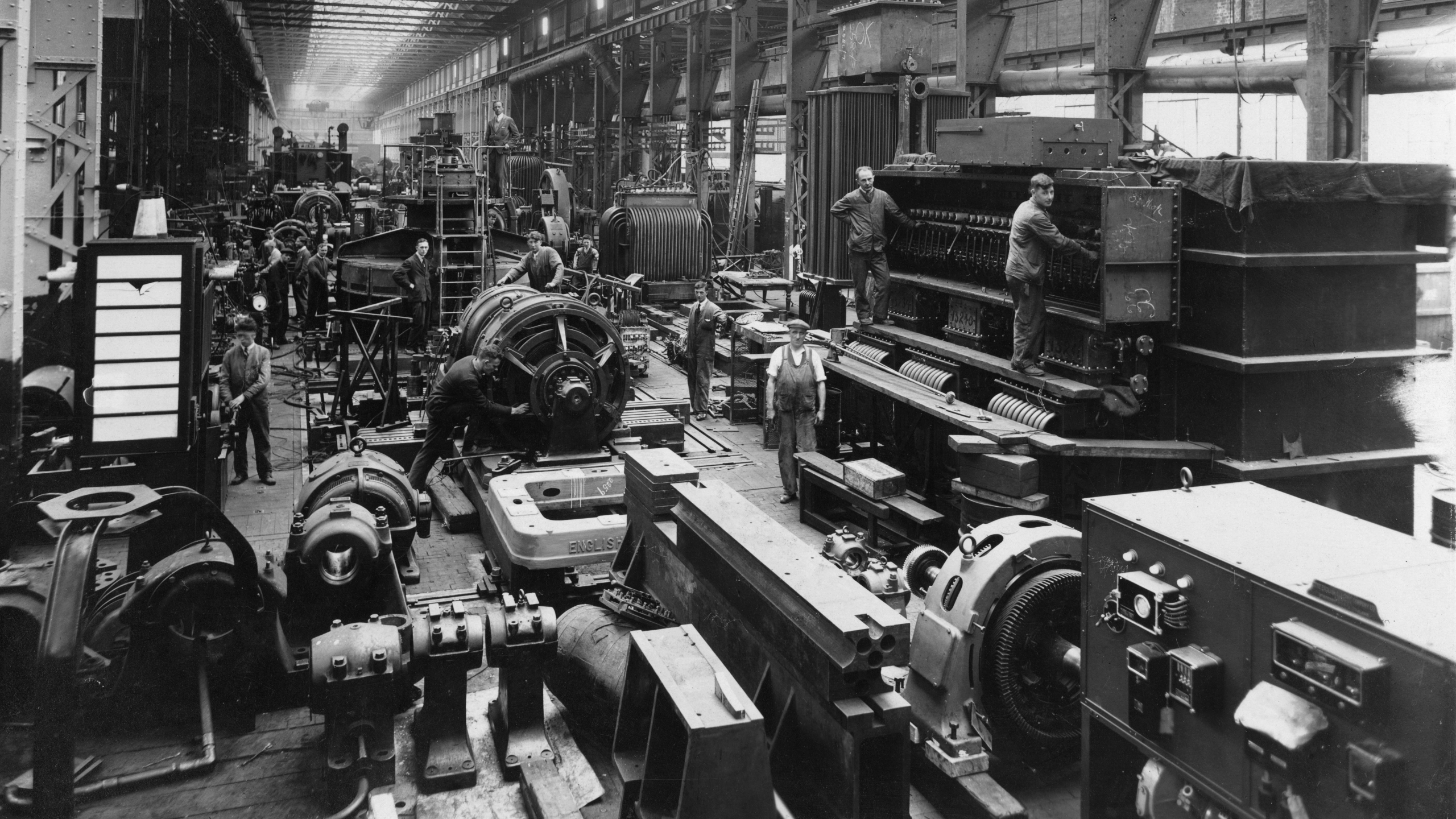
As we continue our reflections on the place and role of Catholicism in the 250 years of our nation, we now arrive at the age to which Pope Leo XIII spoke, the late 19th and early 20th centuries, characterized in the United States by ongoing mass immigration into the United States and the rapid development of that industrialization to which Pope Leo XIII spoke in his encyclical, Rerum Novarum.
The Gilded Age and the Age of Industrialization perhaps transformed the United States more dramatically than any period since the American Revolution. Between the end of the Civil War and the early twentieth century, the nation became an industrial power, fueled by railroads, steel mills, mining, manufacturing, and unprecedented immigration. Millions of workers labored in factories under dangerous conditions, while immense fortunes accumulated in the hands of industrialists such as Andrew Carnegie, John D. Rockefeller, and J.P. Morgan, giving the era the name, “The Gilded Age.”
 Into this rapidly changing society came millions of Catholic immigrants from Ireland, Germany, Italy, Poland, Bohemia, and Eastern Europe. At precisely this historical moment Pope Leo XIII published Rerum Novarum (1891), the foundational document of modern Catholic social teaching. The encyclical profoundly shaped Catholic political thought, inspired a distinctive pastoral ministry to workers, and established a lasting Catholic legacy in American public life.
Industrialization produced extraordinary economic growth but also unprecedented social inequalities. Twelve-hour workdays, child labor, industrial accidents, and poverty were common realities. Labor unrest frequently erupted into violence, including the Great Railroad Strike of 1877, the Haymarket Affair of 1886, and the Homestead Strike of 1892. The Catholic Church found itself ministering primarily to the working class. The parish church became not only a place of worship but also the center of ethnic identity, education, charity, and community life.
Catholic bishops recognized that industrialization presented not merely economic questions but moral ones. The dignity of the human person, the responsibilities of employers, the rights of workers, and the obligations of the state demanded theological reflection.
Published by Pope Leo XIII in 1891, Rerum Novarum (“Of New Things”) rejected the two dominant ideologies of the age. On one side stood laissez-faire capitalism, which often treated labor as a commodity subject solely to market forces. On the other stood revolutionary socialism, which denied private property and promoted class conflict. Pope Leo XIII charted a distinctly Catholic path between these extremes. His principal teachings included:
- the inherent dignity of every worker because every person is created in the image of God;
- the right to private property as a natural right;
- the moral obligation to pay a just wage sufficient to support a family;
- the legitimacy of labor unions;
- the responsibility of government to protect the common good;
- the duty of employers to respect workers as persons rather than instruments of production;
- the rejection of class warfare in favor of cooperation rooted in justice and charity.
The encyclical was revolutionary because it treated social and economic life as subjects of moral theology rather than merely political debate.
The Gilded Age and its mass industrialization in the United States confronted the Catholic Church with one of the defining challenges of the modern world: how to proclaim the Gospel in an industrial society marked by extraordinary wealth alongside widespread exploitation.
Pope Leo XIII’s Rerum Novarum provided the theological framework for this response by affirming the dignity of labor, defending the rights of workers, safeguarding private property, and calling for cooperation rather than class conflict. American bishops such as Cardinal James Gibbons translated these principles into public advocacy, while priests, religious sisters, and parish communities embodied them in daily pastoral ministry among immigrants and industrial workers. Their work left a lasting legacy that continues to shape Catholic social teaching and American public life.
The concerns first addressed during the Age of Industrialization remain strikingly relevant today, as Pope Leo XIV has observed in comparing Pope Leo XIII’s response to the first industrial revolution with the Church’s responsibility to address the ethical challenges posed by artificial intelligence and a new technological revolution.
Next month: The Great Depression and the New Deal
More News
 https://www.rapidcitydiocese.org/wp-content/uploads/2026/08/bishop-august-column-scaled.jpg
1440
2560
Becky Berreth
https://www.rapidcitydiocese.org/wp-content/uploads/2022/02/WebHeader22-1.png
Becky Berreth2026-08-19 15:13:102026-08-19 16:02:39The Great Depression and the New Deal
https://www.rapidcitydiocese.org/wp-content/uploads/2026/08/bishop-august-column-scaled.jpg
1440
2560
Becky Berreth
https://www.rapidcitydiocese.org/wp-content/uploads/2022/02/WebHeader22-1.png
Becky Berreth2026-08-19 15:13:102026-08-19 16:02:39The Great Depression and the New Deal https://www.rapidcitydiocese.org/wp-content/uploads/2026/08/Black-Elk-CRC-20-scaled.jpg
1707
2560
Becky Berreth
https://www.rapidcitydiocese.org/wp-content/uploads/2022/02/WebHeader22-1.png
Becky Berreth2026-08-18 11:00:172026-08-19 14:49:1350 years of ministry
https://www.rapidcitydiocese.org/wp-content/uploads/2026/08/Black-Elk-CRC-20-scaled.jpg
1707
2560
Becky Berreth
https://www.rapidcitydiocese.org/wp-content/uploads/2022/02/WebHeader22-1.png
Becky Berreth2026-08-18 11:00:172026-08-19 14:49:1350 years of ministry https://www.rapidcitydiocese.org/wp-content/uploads/2026/08/DSC_2729.jpg
630
1200
Becky Berreth
https://www.rapidcitydiocese.org/wp-content/uploads/2022/02/WebHeader22-1.png
Becky Berreth2026-08-15 11:00:032026-08-14 15:12:25Surgite Eamus Dinner Celebrates Vocations
https://www.rapidcitydiocese.org/wp-content/uploads/2026/08/DSC_2729.jpg
630
1200
Becky Berreth
https://www.rapidcitydiocese.org/wp-content/uploads/2022/02/WebHeader22-1.png
Becky Berreth2026-08-15 11:00:032026-08-14 15:12:25Surgite Eamus Dinner Celebrates Vocations https://www.rapidcitydiocese.org/wp-content/uploads/2026/06/Catechetical-Kickoff-2026-FB-Event-scaled.png
1440
2560
Becky Berreth
https://www.rapidcitydiocese.org/wp-content/uploads/2022/02/WebHeader22-1.png
Becky Berreth2026-08-14 11:00:352026-08-24 09:44:53Catechetical Kick-Off: A desire to grow in faith
https://www.rapidcitydiocese.org/wp-content/uploads/2026/06/Catechetical-Kickoff-2026-FB-Event-scaled.png
1440
2560
Becky Berreth
https://www.rapidcitydiocese.org/wp-content/uploads/2022/02/WebHeader22-1.png
Becky Berreth2026-08-14 11:00:352026-08-24 09:44:53Catechetical Kick-Off: A desire to grow in faith https://www.rapidcitydiocese.org/wp-content/uploads/2026/08/048A8410.jpg
1152
2048
Becky Berreth
https://www.rapidcitydiocese.org/wp-content/uploads/2022/02/WebHeader22-1.png
Becky Berreth2026-08-12 09:37:002026-08-12 14:20:32Dedication and Blessing of St. Rose of Lima
https://www.rapidcitydiocese.org/wp-content/uploads/2026/08/048A8410.jpg
1152
2048
Becky Berreth
https://www.rapidcitydiocese.org/wp-content/uploads/2022/02/WebHeader22-1.png
Becky Berreth2026-08-12 09:37:002026-08-12 14:20:32Dedication and Blessing of St. Rose of Lima https://www.rapidcitydiocese.org/wp-content/uploads/2026/03/Becoming-One-Banner.png
1080
1920
Becky Berreth
https://www.rapidcitydiocese.org/wp-content/uploads/2022/02/WebHeader22-1.png
Becky Berreth2026-08-11 11:00:172026-08-11 14:44:36A chance to reconnect
https://www.rapidcitydiocese.org/wp-content/uploads/2026/03/Becoming-One-Banner.png
1080
1920
Becky Berreth
https://www.rapidcitydiocese.org/wp-content/uploads/2022/02/WebHeader22-1.png
Becky Berreth2026-08-11 11:00:172026-08-11 14:44:36A chance to reconnect https://www.rapidcitydiocese.org/wp-content/uploads/2026/08/web-renewal-scaled.jpg
1440
2560
Becky Berreth
https://www.rapidcitydiocese.org/wp-content/uploads/2022/02/WebHeader22-1.png
Becky Berreth2026-08-07 11:00:252026-08-07 16:34:51Sr. Lorane Coffin, OSB, celebrates 75 years
https://www.rapidcitydiocese.org/wp-content/uploads/2026/08/web-renewal-scaled.jpg
1440
2560
Becky Berreth
https://www.rapidcitydiocese.org/wp-content/uploads/2022/02/WebHeader22-1.png
Becky Berreth2026-08-07 11:00:252026-08-07 16:34:51Sr. Lorane Coffin, OSB, celebrates 75 years https://www.rapidcitydiocese.org/wp-content/uploads/2026/08/IMG_7370-scaled.jpg
1440
2560
Becky Berreth
https://www.rapidcitydiocese.org/wp-content/uploads/2022/02/WebHeader22-1.png
Becky Berreth2026-08-05 11:47:312026-08-05 13:29:51Deacon Ben Black Bear celebrates 50 years
https://www.rapidcitydiocese.org/wp-content/uploads/2026/08/IMG_7370-scaled.jpg
1440
2560
Becky Berreth
https://www.rapidcitydiocese.org/wp-content/uploads/2022/02/WebHeader22-1.png
Becky Berreth2026-08-05 11:47:312026-08-05 13:29:51Deacon Ben Black Bear celebrates 50 years https://www.rapidcitydiocese.org/wp-content/uploads/2026/08/e9397c57-ac37-4337-a4e5-8f133751fc58-copy.jpg
784
1392
Becky Berreth
https://www.rapidcitydiocese.org/wp-content/uploads/2022/02/WebHeader22-1.png
Becky Berreth2026-08-04 11:00:442026-08-05 14:33:02Steubenville St. Paul 2026
https://www.rapidcitydiocese.org/wp-content/uploads/2026/08/e9397c57-ac37-4337-a4e5-8f133751fc58-copy.jpg
784
1392
Becky Berreth
https://www.rapidcitydiocese.org/wp-content/uploads/2022/02/WebHeader22-1.png
Becky Berreth2026-08-04 11:00:442026-08-05 14:33:02Steubenville St. Paul 2026