
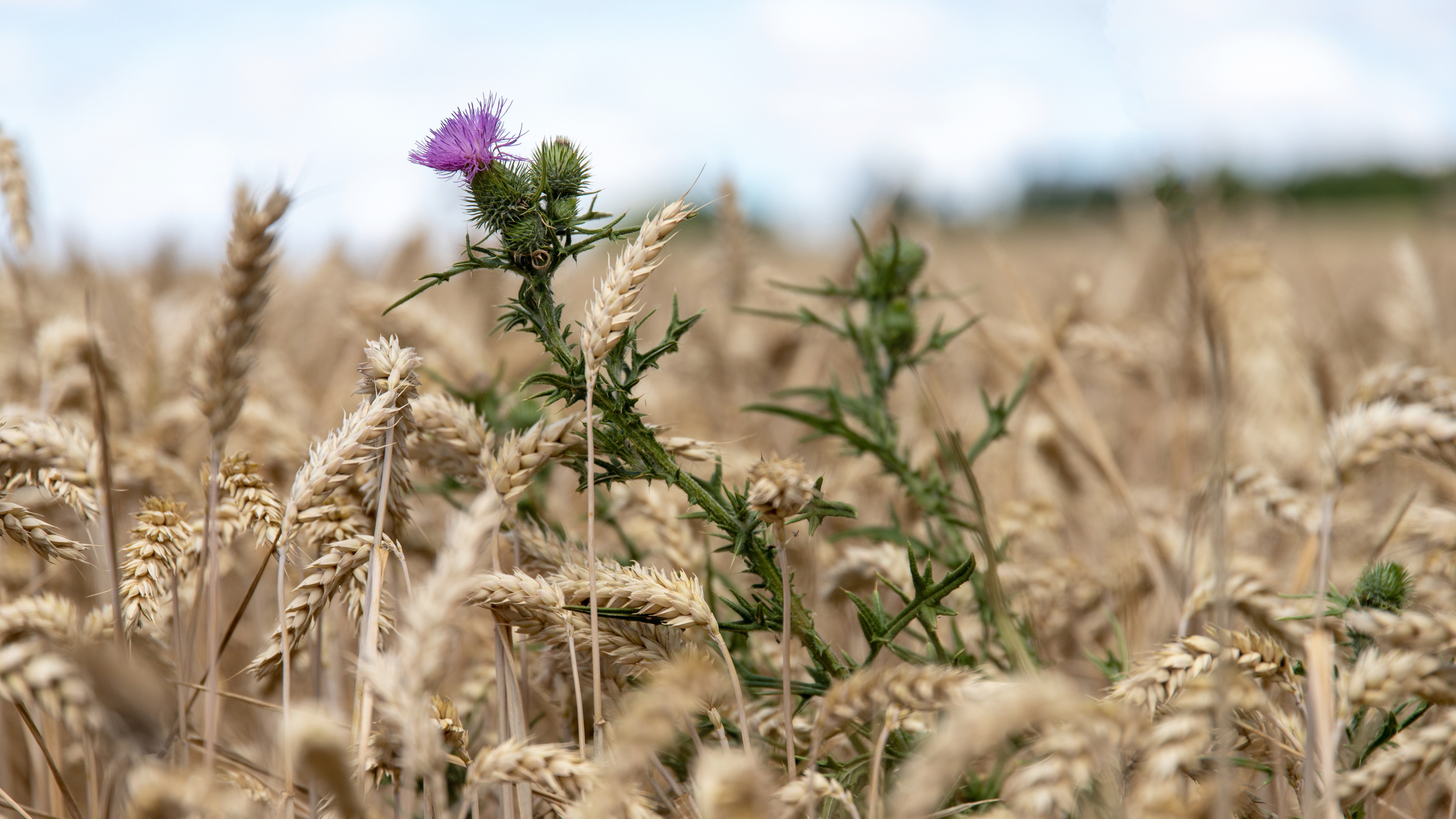
We are weeds and wheat
Father Leo Hausmann
Homily from the Televised Mass, NewsCenter1
Sixteenth Sunday in Ordinary Time, July 23, 2023
Have you ever noticed that the people who are bad sometimes are the very same people who are good? It is like a story called, “Two Wolves.” The story goes like this: An old Cherokee is teaching his grandson about life.
“A fight is going on inside me,” he said to the boy. “It is a terrible fight, and it is between two wolves. One is evil — he is anger, envy, sorrow, regret, greed, arrogance, self-pity, guilt, resentment, inferiority, lies, false pride, superiority, and ego.”
He continued, “The other is good — he is joy, peace, love, hope, serenity, humility, kindness, benevolence, empathy, generosity, truth, compassion, and faith. The same fight is going on inside you, and inside every other person, too.”
The grandson thought about it for a minute and then he asked his grandfather, “Which wolf will win?” The old Cherokee simply replied, “The one you feed.”
Today’s Gospel parable reminds us that we are a mixture of good and evil and, hence, instead of judging others we have to lead exemplary lives, Christian lives, and leave the judgment to God.
In the parable the farmer plants his wheat, but at some point, his slaves notice weeds growing in the wheat. The “weeds” among the wheat in the parable are known as “bearded darnel.” They resemble wheat plants so closely that it is impossible to distinguish one from the other until the ears of seed appear. But by that time, the wheat and darnel roots are so intertwined that the bearded darnel cannot be weeded out without plucking the wheat out with them. At the end of the harvest the bearded darnel must be removed from the wheat by hand, because they are slightly poisonous, and after the weeds were removed from the wheat, the weeds had to be burned so that the seeds would not infect the field again the next year.
The weeds in the parable stand for unrepentant sinners, people whose priority is themselves, who use others for their own advancement or pleasure instead of serving them. These unrepentant sinners, unless they cooperate with God’s grace and repent and change their lives, will end up in Hell, “the fiery furnace, where there will be wailing and grinding of teeth.”
The wheat stands for the righteous, those who have resisted the seductions of evil, repented of their sins, and battled against selfishness in order to follow Christ.
I think there are various lessons we can draw from the parable of the wheat and the weeds. In one sense, it helps us to grasp why God permits evil to exist in our world. Though we cannot fully understand why, Jesus helps us to trust that God is in control and that God has a plan that at the end of the age He definitively destroys evil. For this we must trust in the wisdom and goodness of God.
The parable also helps us to understand the patience of God. It is gentle patience. The first reading from the Book of Wisdom speaks of the power of God, saying of God that He is “master of might.” Yet “with much leniency you govern us” the reading stated. It goes on to say that by the gentle patience of God, God teaches us to be just and kind in our deeds.
This God that the Book of Wisdom teaches us about is the same God who would not in anger destroy the whole of his creation, that is the field of wheat. Rather, with gentle patience He nurtures what is good so that not one good grain of wheat, that is not one of his children are to be lost. God is all powerful but incredibly gentle and patient with us.
And finally, the field of wheat could be said to represent the kingdom of God in our individual souls. In this life each of us is a mixture of good and evil — sin being the evil and virtue being the good. We are weeds and wheat. While God is patient with us, He leaves us with the responsibility to cultivate the good, the virtue. Or like the story of the wolves I began with, we have the responsibility to feed the good wolf and not to feed the evil one.
In that case, the question comes down to what is the food that nurtures the good wolf? Fortunately, God has provided the food through His Church. The food should already be very familiar to us. Some examples are: daily scripture reading; daily prayer praising the goodness of God, thanking Him and petitioning Him for our needs, wholesome spiritual conversations with wholesome spiritual people; the use of sacramentals, such as Holy Water; frequent use of the sacrament of Reconciliation and weekly or even daily attendance at the celebration of the Eucharist.
Whether it be a wolf or a wheat plant, it needs its nutrients every day if it is going to thrive and be healthy. So it is with the wheat or the wolf inside us. We need to daily be attentive to nurturing the good in ourselves so that the good chokes out any existing weeds.
More News
 https://www.rapidcitydiocese.org/wp-content/uploads/2026/08/bishop-august-column-scaled.jpg
1440
2560
Becky Berreth
https://www.rapidcitydiocese.org/wp-content/uploads/2022/02/WebHeader22-1.png
Becky Berreth2026-08-19 15:13:102026-08-19 16:02:39The Great Depression and the New Deal
https://www.rapidcitydiocese.org/wp-content/uploads/2026/08/bishop-august-column-scaled.jpg
1440
2560
Becky Berreth
https://www.rapidcitydiocese.org/wp-content/uploads/2022/02/WebHeader22-1.png
Becky Berreth2026-08-19 15:13:102026-08-19 16:02:39The Great Depression and the New Deal https://www.rapidcitydiocese.org/wp-content/uploads/2026/08/Black-Elk-CRC-20-scaled.jpg
1707
2560
Becky Berreth
https://www.rapidcitydiocese.org/wp-content/uploads/2022/02/WebHeader22-1.png
Becky Berreth2026-08-18 11:00:172026-08-19 14:49:1350 years of ministry
https://www.rapidcitydiocese.org/wp-content/uploads/2026/08/Black-Elk-CRC-20-scaled.jpg
1707
2560
Becky Berreth
https://www.rapidcitydiocese.org/wp-content/uploads/2022/02/WebHeader22-1.png
Becky Berreth2026-08-18 11:00:172026-08-19 14:49:1350 years of ministry https://www.rapidcitydiocese.org/wp-content/uploads/2026/08/DSC_2729.jpg
630
1200
Becky Berreth
https://www.rapidcitydiocese.org/wp-content/uploads/2022/02/WebHeader22-1.png
Becky Berreth2026-08-15 11:00:032026-08-14 15:12:25Surgite Eamus Dinner Celebrates Vocations
https://www.rapidcitydiocese.org/wp-content/uploads/2026/08/DSC_2729.jpg
630
1200
Becky Berreth
https://www.rapidcitydiocese.org/wp-content/uploads/2022/02/WebHeader22-1.png
Becky Berreth2026-08-15 11:00:032026-08-14 15:12:25Surgite Eamus Dinner Celebrates Vocations https://www.rapidcitydiocese.org/wp-content/uploads/2026/06/Catechetical-Kickoff-2026-FB-Event-scaled.png
1440
2560
Becky Berreth
https://www.rapidcitydiocese.org/wp-content/uploads/2022/02/WebHeader22-1.png
Becky Berreth2026-08-14 11:00:352026-08-24 09:44:53Catechetical Kick-Off: A desire to grow in faith
https://www.rapidcitydiocese.org/wp-content/uploads/2026/06/Catechetical-Kickoff-2026-FB-Event-scaled.png
1440
2560
Becky Berreth
https://www.rapidcitydiocese.org/wp-content/uploads/2022/02/WebHeader22-1.png
Becky Berreth2026-08-14 11:00:352026-08-24 09:44:53Catechetical Kick-Off: A desire to grow in faith https://www.rapidcitydiocese.org/wp-content/uploads/2026/08/048A8410.jpg
1152
2048
Becky Berreth
https://www.rapidcitydiocese.org/wp-content/uploads/2022/02/WebHeader22-1.png
Becky Berreth2026-08-12 09:37:002026-08-12 14:20:32Dedication and Blessing of St. Rose of Lima
https://www.rapidcitydiocese.org/wp-content/uploads/2026/08/048A8410.jpg
1152
2048
Becky Berreth
https://www.rapidcitydiocese.org/wp-content/uploads/2022/02/WebHeader22-1.png
Becky Berreth2026-08-12 09:37:002026-08-12 14:20:32Dedication and Blessing of St. Rose of Lima https://www.rapidcitydiocese.org/wp-content/uploads/2026/03/Becoming-One-Banner.png
1080
1920
Becky Berreth
https://www.rapidcitydiocese.org/wp-content/uploads/2022/02/WebHeader22-1.png
Becky Berreth2026-08-11 11:00:172026-08-11 14:44:36A chance to reconnect
https://www.rapidcitydiocese.org/wp-content/uploads/2026/03/Becoming-One-Banner.png
1080
1920
Becky Berreth
https://www.rapidcitydiocese.org/wp-content/uploads/2022/02/WebHeader22-1.png
Becky Berreth2026-08-11 11:00:172026-08-11 14:44:36A chance to reconnect https://www.rapidcitydiocese.org/wp-content/uploads/2026/08/web-renewal-scaled.jpg
1440
2560
Becky Berreth
https://www.rapidcitydiocese.org/wp-content/uploads/2022/02/WebHeader22-1.png
Becky Berreth2026-08-07 11:00:252026-08-07 16:34:51Sr. Lorane Coffin, OSB, celebrates 75 years
https://www.rapidcitydiocese.org/wp-content/uploads/2026/08/web-renewal-scaled.jpg
1440
2560
Becky Berreth
https://www.rapidcitydiocese.org/wp-content/uploads/2022/02/WebHeader22-1.png
Becky Berreth2026-08-07 11:00:252026-08-07 16:34:51Sr. Lorane Coffin, OSB, celebrates 75 years https://www.rapidcitydiocese.org/wp-content/uploads/2026/08/IMG_7370-scaled.jpg
1440
2560
Becky Berreth
https://www.rapidcitydiocese.org/wp-content/uploads/2022/02/WebHeader22-1.png
Becky Berreth2026-08-05 11:47:312026-08-05 13:29:51Deacon Ben Black Bear celebrates 50 years
https://www.rapidcitydiocese.org/wp-content/uploads/2026/08/IMG_7370-scaled.jpg
1440
2560
Becky Berreth
https://www.rapidcitydiocese.org/wp-content/uploads/2022/02/WebHeader22-1.png
Becky Berreth2026-08-05 11:47:312026-08-05 13:29:51Deacon Ben Black Bear celebrates 50 years https://www.rapidcitydiocese.org/wp-content/uploads/2026/08/e9397c57-ac37-4337-a4e5-8f133751fc58-copy.jpg
784
1392
Becky Berreth
https://www.rapidcitydiocese.org/wp-content/uploads/2022/02/WebHeader22-1.png
Becky Berreth2026-08-04 11:00:442026-08-05 14:33:02Steubenville St. Paul 2026
https://www.rapidcitydiocese.org/wp-content/uploads/2026/08/e9397c57-ac37-4337-a4e5-8f133751fc58-copy.jpg
784
1392
Becky Berreth
https://www.rapidcitydiocese.org/wp-content/uploads/2022/02/WebHeader22-1.png
Becky Berreth2026-08-04 11:00:442026-08-05 14:33:02Steubenville St. Paul 2026