

Before the Diocese of Lead
Bishop Martin Marty was born in Schwyz, Switzerland. He joined the Benedictine Abbey of Einsiedeln and was ordained in 1856. His religious order sent him to the United States to St. Meinrad, a new foundation in southern Indiana. In 1876 the Bureau of Catholic Indian Missions sent him to Dakota Territory. In 1879 he was appointed Vicar Apostolic for Dakota Territory. In 1889 he was named Bishop of Sioux Falls, the one diocese of the state of South Dakota.

The First Nine Bishops
Bishop John N. Stariha was born May 12, 1845, in Austria. He immigrated to America at age 22 and studied at St. Francis Seminary, Milwaukee, Wis. He was ordained the first Bishop of Lead on Oct. 28, 1902. He was installed at St. Patrick Cathedral, Lead, on Nov. 23, 1902. The see city is the community where the bishop resides and has his cathedral. At this time, there were only five priests here. Plagued by chronic ill health, he resigned Mar. 29, 1909.
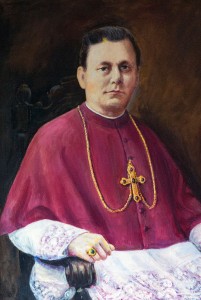
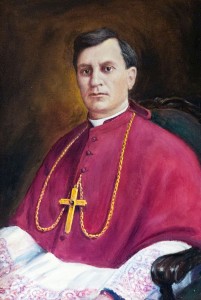
Bishop Joseph F. Busch was born Apr. 18, 1886. He was ordained for the Diocese of Lead on May 19, 1910, and he was installed on Jun. 21, 1910. On Feb. 21, 1915, he was transferred to St. Cloud, Minnesota, as its fourth bishop.
Bishop John J. Lawler was born Aug. 4, 1862. On May 19, 1910, he was ordained as an auxiliary bishop for the Archdiocese of St. Paul/Minneapolis. He was installed as the third Bishop of Lead on May 4, 1916. He recruited priests from Europe and the eastern United States. When he arrived, 18 priests were active in the diocese. During his administration, the see was moved from Lead to Rapid City on Aug. 1, 1930. By 1947, there were 107 priests, 87 parishes, and 10 schools. He passed away Mar. 11, 1948.
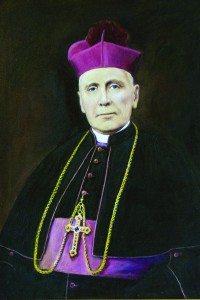
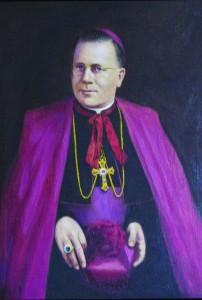
Bishop William T. McCarty, CSSR, was a member of the Redemptorist religious order. He was born on Aug. 11, 1889. When WWII began, he became a military chaplain. He was ordained an auxiliary bishop of New York in Jan. 1943, with special duties to the Military Ordinate. On Apr. 10, 1947, he was named the auxiliary bishop of Rapid City with the right of succession upon the death of the bishop. Under his leadership, the Cathedral of Our Lady of Perpetual Help was built. He retired Sept. 17, 1969, and passed away Sept. 14, 1972.
Bishop Harold J. Dimmerling was born Sep. 23, 1914. He was ordained the fifth Bishop of Rapid City on Oct. 30, 1969. During his administration, he instituted several diocesan offices and programs to meet the needs of the people in the diocese — Rural Life; Stewardship; Social Concerns, Ministry to Separated, Divorced and Widowed; Religious Education; and the West River Catholic newspaper. Under his leadership Catholic Social Services was established. He helped initiate a training program for permanent deacons and in 1975 he ordained the first five Native American deacons in the United States. He passed away on Dec. 13, 1987.
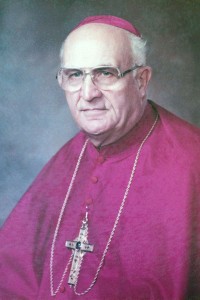
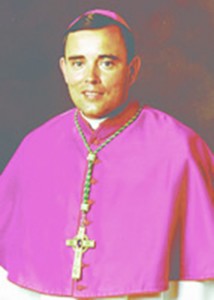
Bishop Charles J. Chaput, OFM Cap., was born Sep. 26, 1944. He was ordained a priest Aug. 29, 1970, and he was ordained the sixth bishop of Rapid City on Jul. 28, 1988. He was the second man of Native American descent to be ordained a bishop and the first to become the head of a diocese. He established the Western S.D. Catholic Foundation and the Office of Native Concerns. Under his leadership, St. Thomas More High School was built. He was installed as Archbishop of Denver, Apr. 7, 1996. Sep. 8, 2001, he was installed as the Archbishop of Philadelphia. He is retired.
Bishop Blase J. Cupich was born Mar. 19, 1949. He was ordained a priest Aug. 16, 197,5 and he was ordained the 7th bishop of the Diocese of Rapid City on Sep. 21, 1998. Part of his legacy is the Terra Sancta project — a former Benedictine convent renovated as a retreat center and an elementary school. He was installed as Bishop of Spokane, Sept. 3, 2010. He was appointed Sep. 20, 2014, as archbishop of the Archdiocese of Chicago, and installed November 18, 2014, and he was elevated to the College of Cardinals on Nov. 19, 2016.
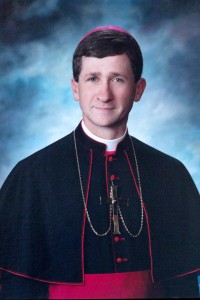

Bishop Robert D. Gruss was born Jun. 25, 1955. He was ordained to the priesthood Jul. 2, 1994. He was ordained and installed as Bishop of Rapid City, Jul. 28, 2011. He opened the cause for canonization for Nicholas Black Elk, servant of God, in 2016. Under his leadership, the Living the Mission Campaign raised funds for a new chancery, two Newman Centers, Priest Pension Plan, Native American Ministry Endowment, Rapid City Catholic School System Endowment, and improvements at St. Thomas More High School, Rapid City. He was appointed May 24, 2019, and installed as Bishop of the Diocese of Saginaw, Mich., Jul. 26, 2019.
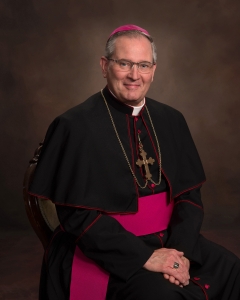
Bishop Peter M. Muhich was ordained the 9th Bishop of Rapid City on July 9, 2020. The Mass was held at the Cathedral of Our Lady of Perpetual Help, Rapid City. Covid-19 pandemic restrictions were in place and the faithful were asked to view the ordination by live-stream and television broadcast. He was born on May 13, 1961, in Eveleth, Minnesota. Bishop Muhich served on the Sister Thea Bowman Foundation Board of Directors, Pittsburgh, PA; Region VIII Bishops (Minnesota, North Dakota and South Dakota) representative to the United States Conference of Catholic Bishops (USCCB), 2021-2023; and the Washington, DC., USCCB Subcommittee on Native American Affairs, 2021-2024. He was the first bishop to hold office in the Main St. Chancery building in 2020. In June 2021, he issued a decree defining the diocesan parish boundaries. In July 2021, he established a convent for four Servants of the Pierced Hearts of Jesus and Mary from the Archdiocese of Miami. In 2022 he established the Flourishing Families Diocesan Strategic Planning Process to plan for the future of priests, parishes and Catholic ministry in western South Dakota. He passed away on February 17, 2024.
More News
 https://www.rapidcitydiocese.org/wp-content/uploads/2026/06/Catechetical-Kickoff-2026-FB-Event-scaled.png
1440
2560
Becky Berreth
https://www.rapidcitydiocese.org/wp-content/uploads/2022/02/WebHeader22-1.png
Becky Berreth2026-08-14 11:00:352026-08-24 09:44:53Catechetical Kick-Off: A desire to grow in faith
https://www.rapidcitydiocese.org/wp-content/uploads/2026/06/Catechetical-Kickoff-2026-FB-Event-scaled.png
1440
2560
Becky Berreth
https://www.rapidcitydiocese.org/wp-content/uploads/2022/02/WebHeader22-1.png
Becky Berreth2026-08-14 11:00:352026-08-24 09:44:53Catechetical Kick-Off: A desire to grow in faith https://www.rapidcitydiocese.org/wp-content/uploads/2026/08/048A8410.jpg
1152
2048
Becky Berreth
https://www.rapidcitydiocese.org/wp-content/uploads/2022/02/WebHeader22-1.png
Becky Berreth2026-08-12 09:37:002026-08-12 14:20:32Dedication and Blessing of St. Rose of Lima
https://www.rapidcitydiocese.org/wp-content/uploads/2026/08/048A8410.jpg
1152
2048
Becky Berreth
https://www.rapidcitydiocese.org/wp-content/uploads/2022/02/WebHeader22-1.png
Becky Berreth2026-08-12 09:37:002026-08-12 14:20:32Dedication and Blessing of St. Rose of Lima https://www.rapidcitydiocese.org/wp-content/uploads/2026/03/Becoming-One-Banner.png
1080
1920
Becky Berreth
https://www.rapidcitydiocese.org/wp-content/uploads/2022/02/WebHeader22-1.png
Becky Berreth2026-08-11 11:00:172026-08-11 14:44:36A chance to reconnect
https://www.rapidcitydiocese.org/wp-content/uploads/2026/03/Becoming-One-Banner.png
1080
1920
Becky Berreth
https://www.rapidcitydiocese.org/wp-content/uploads/2022/02/WebHeader22-1.png
Becky Berreth2026-08-11 11:00:172026-08-11 14:44:36A chance to reconnect