

A connection to the early Church
Father Leo Hausmann
Homily from the Rite of Election
February 18, 2024
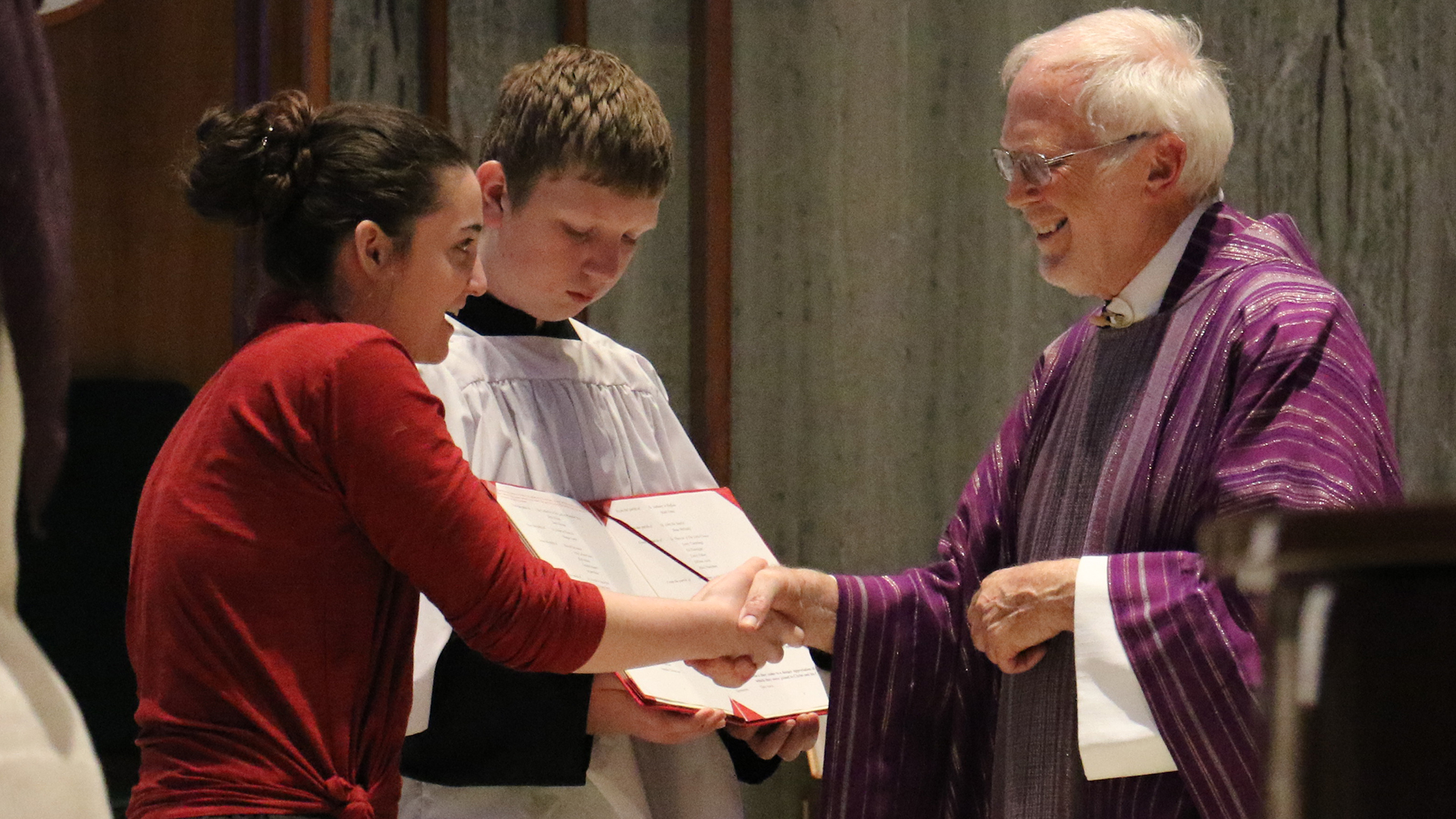
Today we celebrate this important time in the lives of these people here as they are called to the Rites here today. As I mentioned earlier it’s sad that the bishop cannot be here, that the bishop has passed on, and the empty chair, the big chair there, which we call the cathedra, is empty and nobody sits in that chair except for a bishop. And so, I get to sit in the big little chair over there, but not in the big chair because that’s reserved for a bishop. It’s called the cathedra, as I said, and this is called the cathedral and so that tells you the importance of that chair. Only a bishop can be seated in that chair because when Bishop Peter was ordained bishop, another bishop laid hands on his head for that ordination. And someone else had laid hands on that bishop’s head, and all the way back from bishop to bishop to bishop to bishop to the apostles themselves who Jesus had breathed the Holy Spirit on.
That empty chair reminds us of how our faith is ancient but also it is true. It’s ancient because it goes back to the apostles themselves and to Jesus. It’s true because it comes from Jesus himself. That fact of, not just tradition but this very physical connection between the bishops today and the apostles and Jesus Christ himself, is essential for what we profess as our faith. Their faith is our faith. It is ancient and it is true. It’s also ever new by the Holy Spirit who rests upon this Church, this Catholic Church.
That first reading comes right after the flood has receded and Noah and his family enter into a covenant relationship with God and that flood itself, as we heard in the second reading, prefigures baptism.
The early baptismals had eight sides and today some of them do too. In a commentary that I read it said that those eight sides represent the eight survivors of Noah’s family of the flood. Again our faith is tied back even to the time of the Jewish people, our older brothers and sisters in the faith, and how amazing that is.
As you come to this cathedral today for the Rite of Election or the Rite of Continuing Conversion, it is because the church has done this from very early times. I read an account of an early Christian woman named Etheria, and this is what she wrote: “Whoever wishes to give in his name just so on the eve of Lent, and a priest notes down all the names. The next day, the opening of Lent, in the middle of the church, a seat is placed for the bishop and one by one the candidates are led up to him if. If they are men, they come with their godfathers. If they are women, with their godmothers. Then the bishop questions the neighbors of each person who comes in saying, ‘does he lead a good life? Does he respect his parents? Is he given to drunkenness or lying?’ If the candidate is announced beyond reproach by all those who are thus questioned in the presence of witnesses, with his own hand the bishop notes down the man’s name. But if the candidate is accused of failing at any point the bishop tells him to go out saying, ‘let him amend his life and when he has amended it let him come to baptism.’”
That sounds like an awful lot like what you will be doing here today. This was an account from the very early Church. We have that connection once again to the early Church. An important connection.
It wasn’t too long ago in the Church that Lent was really a good thing for all of us to do, as we all have made baptismal promises or for those who are baptized as a baby, as I was, that my godparents and parents who made those baptismal promises for me and as I grew older, I came to take them on to myself. So, every year at Easter time we renew our baptismal promises, all of us, in those Easter Liturgies. Lent has become a time for the whole Church to join with you as we are called to conversion ourselves and so we walk this journey together. That sounds very Catholic to me because that’s what Catholics do. We are a community of believers. A family of God. Brothers and sisters in Christ.
Jesus himself did penance before he began his public life at the beginning of his beginning of public life. We are called to that same thing. In the Gospel Jesus, his first message as he went out and preached publicly, was repent. Believe in the Gospel. Believe in the Good News. God is calling us into eternal life. That is a journey for us.
We no longer call it RCIA, the Rite of Christian initiation, but now what you are doing we call the Order of Christian Initiation because it’s not just a moment but it’s a lifetime of conversion. Putting away our selfishness. Putting away anger that we have in our hearts. Putting away immorality in our life so that we truly can walk with Jesus and truly are prepared for when the Lord calls us to himself.
So today we celebrate this important moment with you. Our prayers go with you not only today but every day as you continue this important journey in your life.
See photos from the event
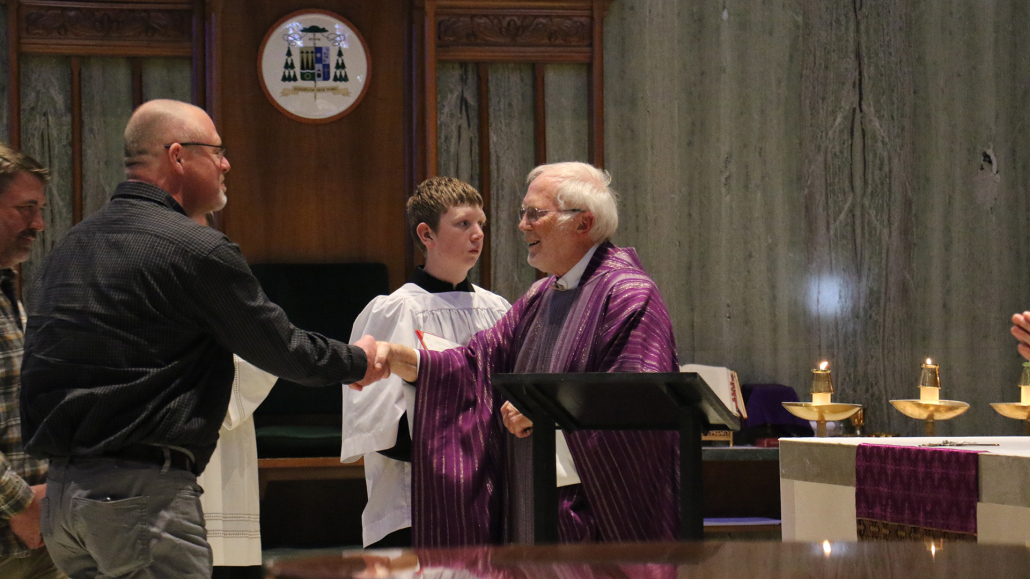
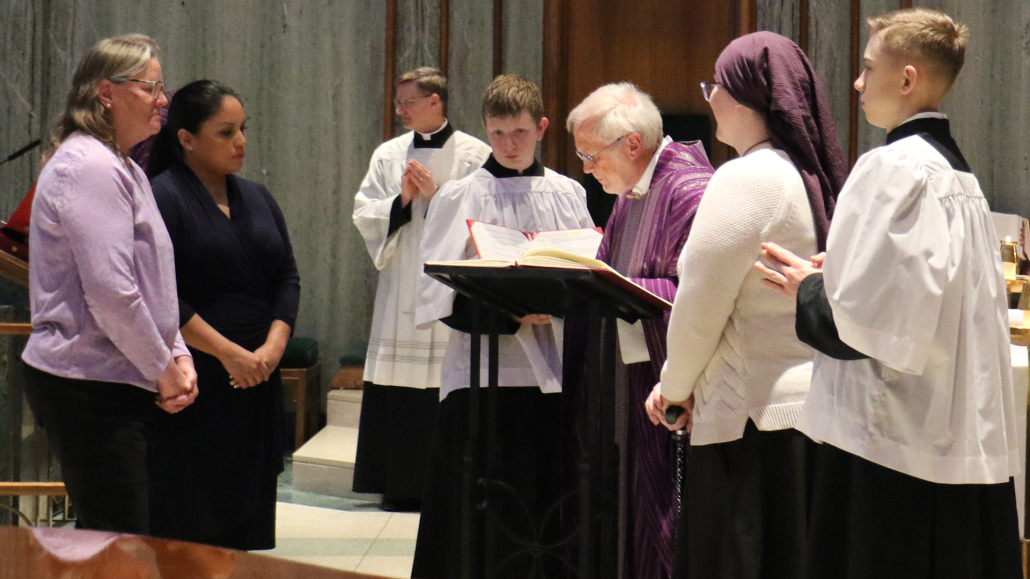
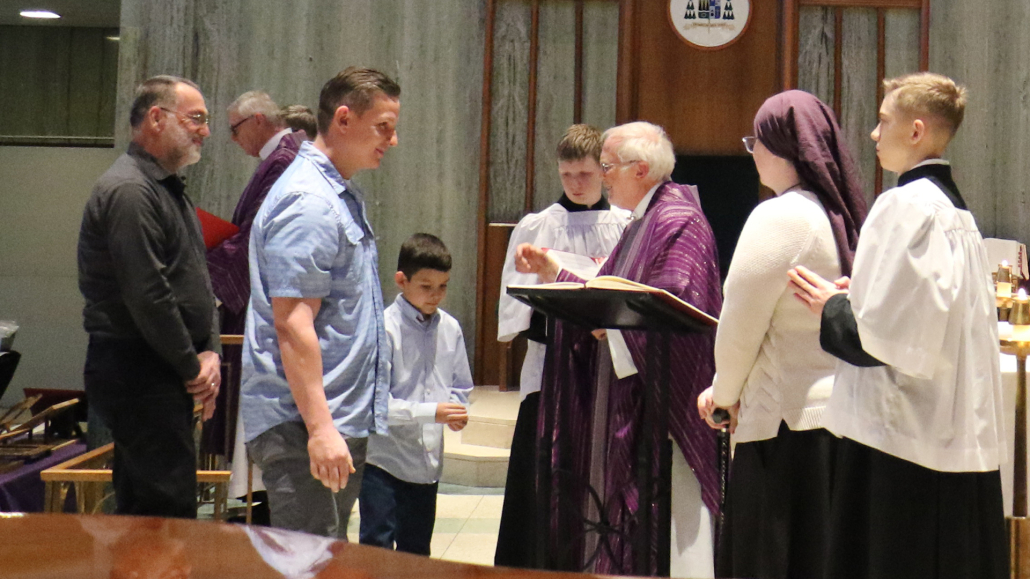
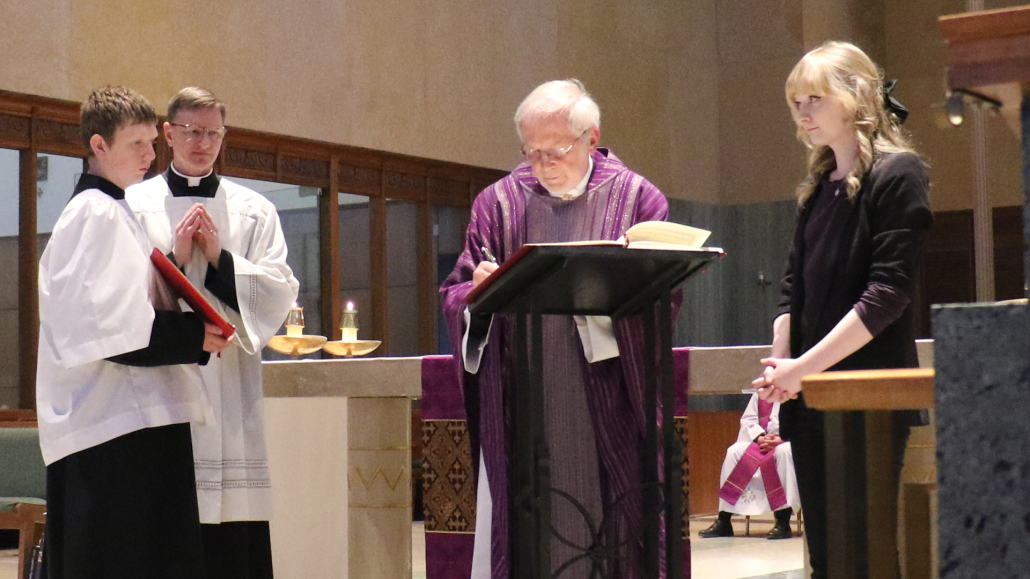
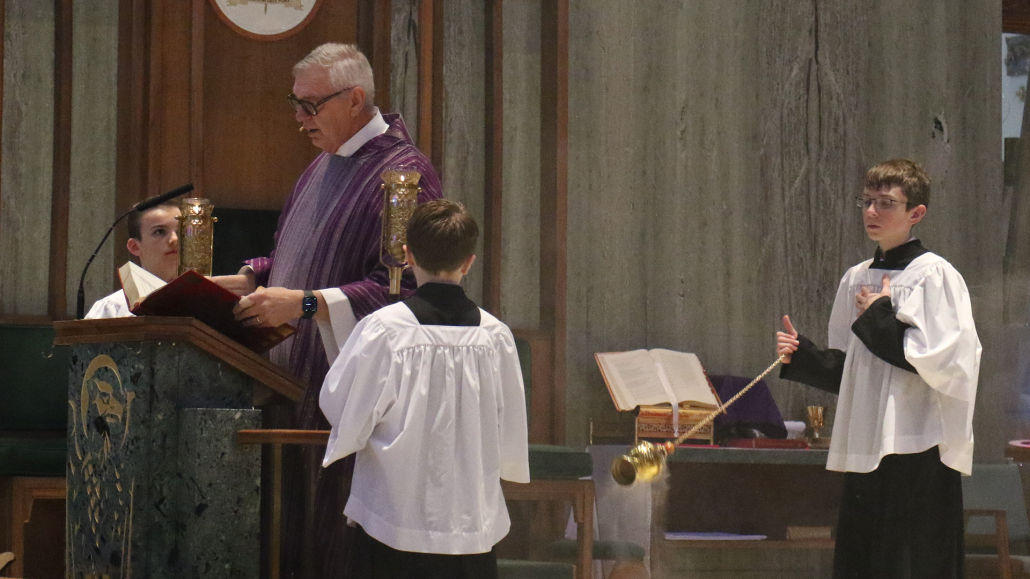
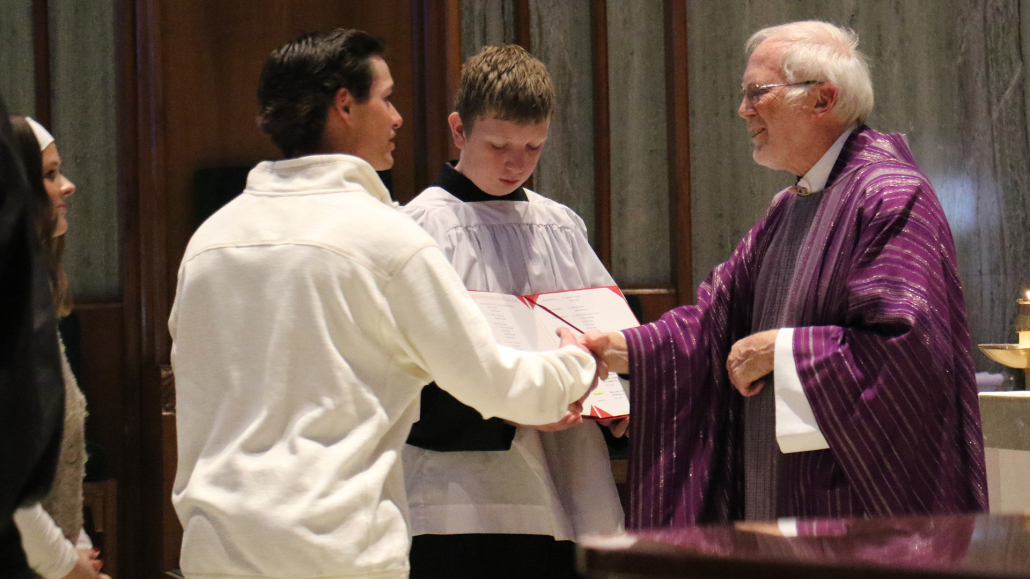
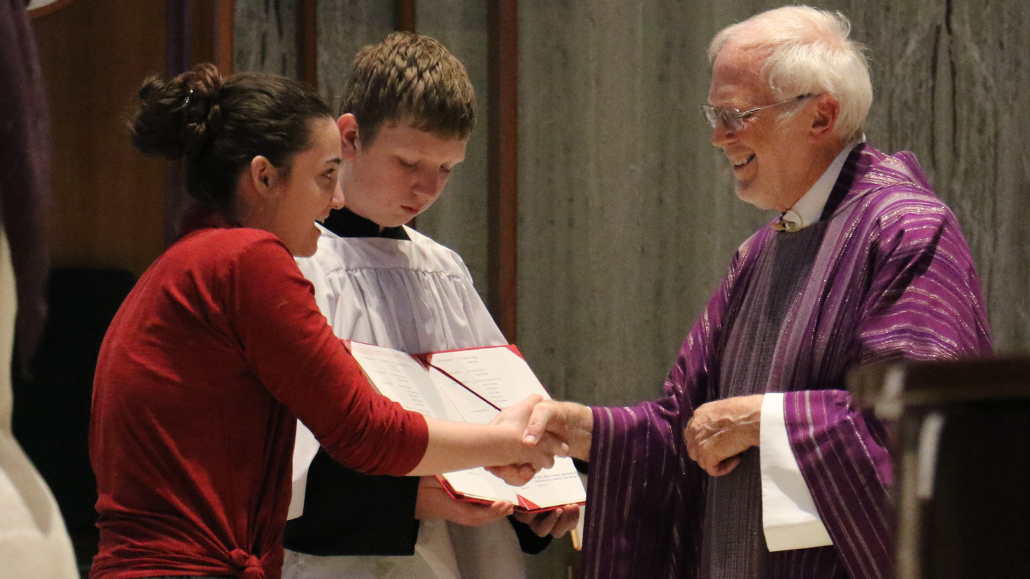
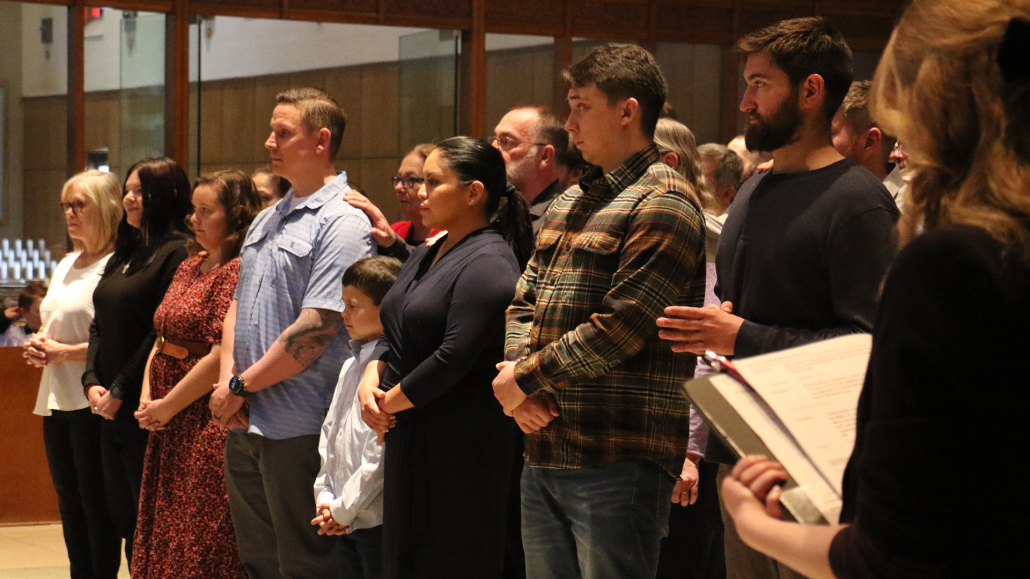
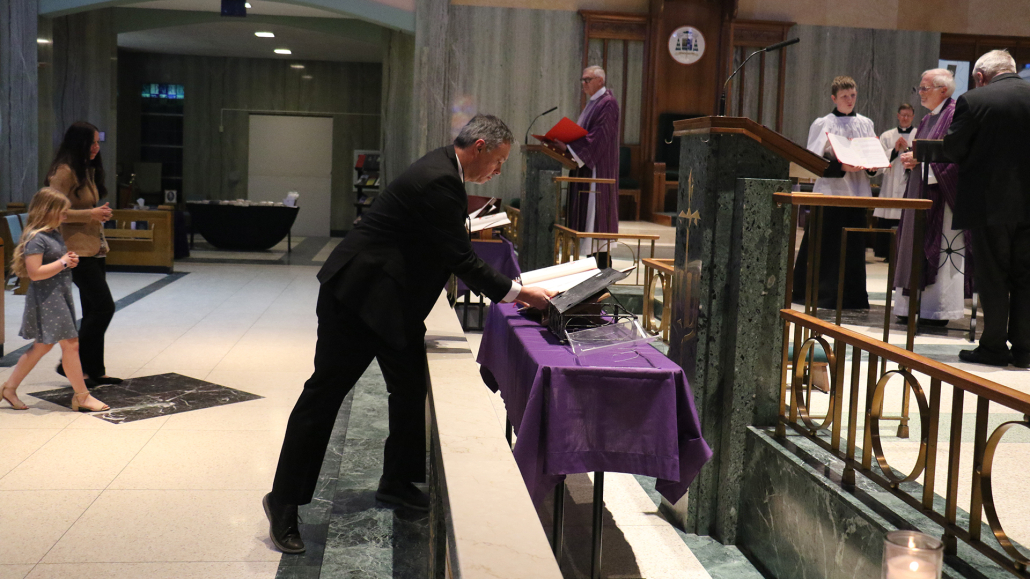
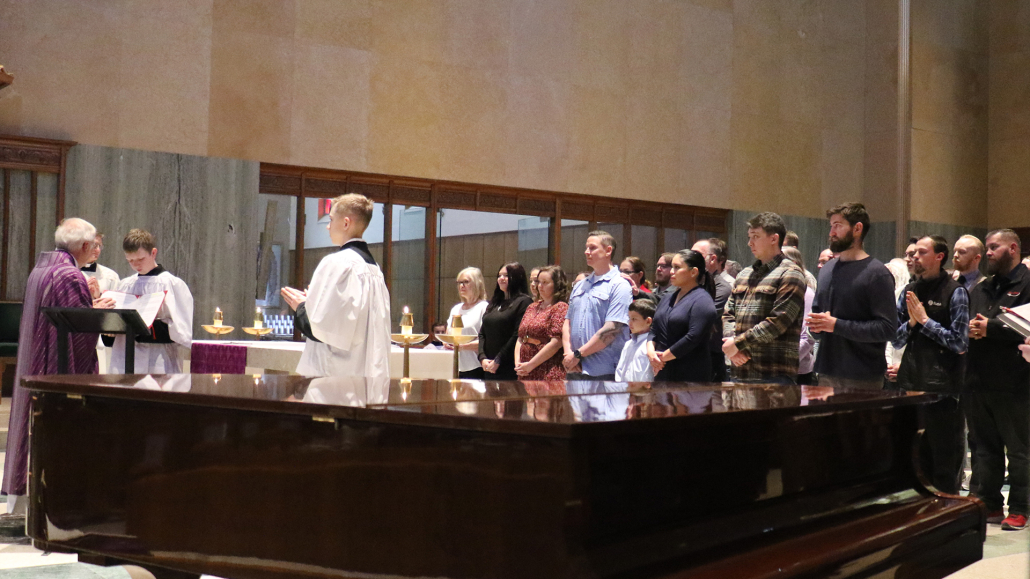
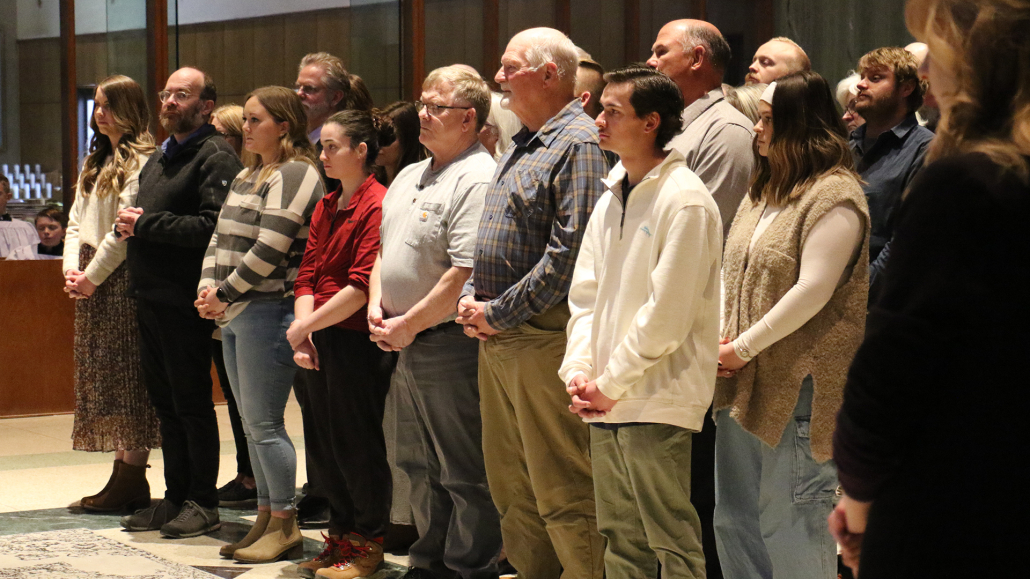
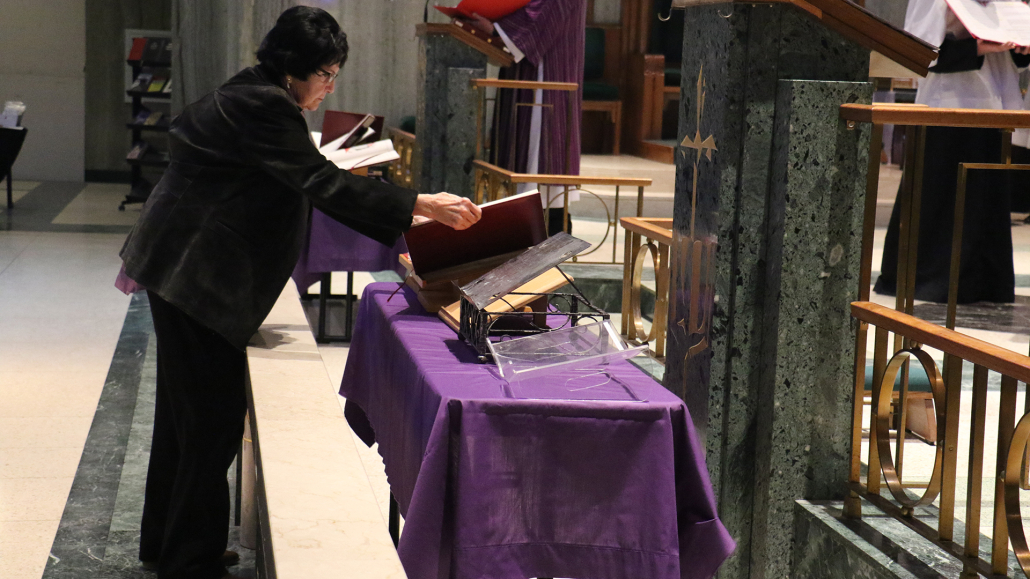
Rite of Election — Affirming the intent to join the Catholic Church
“At the beginning of Lent, which is the time of the proximate preparation for the sacraments of initiation, the election or enrollment of names is celebrated. In this rite, the church hears the testimony of the godparents and catechists. After the catechumens reaffirm their intention, the church passes judgment on their state of preparation and states whether they may go on to the Easter sacraments.” (The Rite of Election, 1978, ICEL)
When an adult chooses to join the Catholic Church, they begin a program can the Order of Christian Initiation of Adults. Those participating in OCIA spend time in prayer, discernment, and reflection while being introduced to all aspects of Catholic teaching, beliefs, and practices. According to Father Leo Hausmann, vicar general for the diocese, there are formal rites and stages to the OCIA process – the pre-catechumenate, followed by the catechumenate. The Rite of Election marks the final phase of preparation to receive the sacraments of initiation (baptism, first communion, and confirmation) usually at the Easter Vigil.
“The Rite of Election is important to mark the beginning of a new phase called the Period of Purification and Enlightenment and the catechumens are now called ‘the elect’ or ‘the illuminandi,” he explained. “The Rite of Election closes the period of the catechumenate.”
On February 18, at 3 p.m., he will celebrate the Rite of Election at the Cathedral of Our Lady of Perpetual Help with catechumens present from many parishes throughout the diocese symbolizing the unity Catholics have to the Universal Church.
“Participating in the Rite of Election at the Cathedral was so powerful to me,” said Amy Julian, who became a full member of the Catholic in 2001. “Seeing all those people from all those parishes, who were making the choice to come into the Catholic Church, it dawned on me that I was a part of something that was so much bigger than I had realized.”
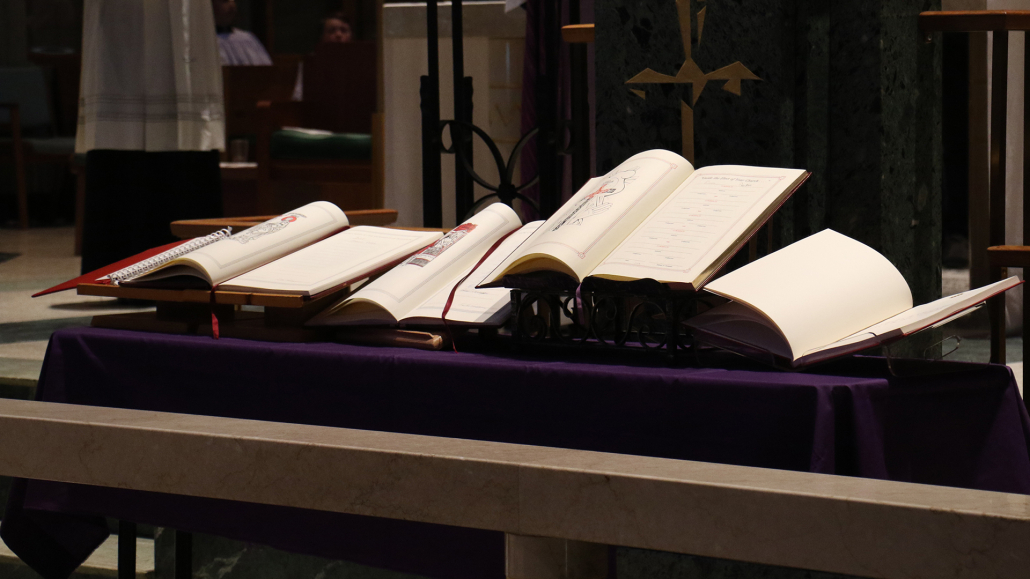
Following the homily, a delegate from each parish responsible for the initiation of the catechumens presents the elect to the bishop and those in attendance. The catechumens inscribe their names in the Book of the Elect at the cathedral, affirming their intention to join the church. The church, then in turn, “elects” these catechumens to receive the sacraments of initiation.
The Rite of Election will also include the Call to Continuing Conversion for persons who are called candidates in the OCIA process. Candidates are those who have been baptized in other Christian traditions and now seek to become members of the Catholic Church. Candidates may also include baptized Catholics who had no instruction in the faith and are now preparing for Eucharist and confirmation.
“It is important for us to support the catechumens and candidates by praying for them as individuals and as their local parish,” said Father Hausmann. “A card or word of encouragement is also appreciated by these catechumens and candidates since this is an involved process at which they have been working hard. Share with them your joy that they will be joining the parish family and share with them your personal story of why the Catholic Church is important in your life.”
The Mass will be live streamed to the diocesan website and the diocesan Facebook page (facebook.com/DioceseofRapidCity).
More News
 https://www.rapidcitydiocese.org/wp-content/uploads/2026/06/Catechetical-Kickoff-2026-FB-Event-scaled.png
1440
2560
Becky Berreth
https://www.rapidcitydiocese.org/wp-content/uploads/2022/02/WebHeader22-1.png
Becky Berreth2026-08-14 11:00:352026-08-24 09:44:53Catechetical Kick-Off: A desire to grow in faith
https://www.rapidcitydiocese.org/wp-content/uploads/2026/06/Catechetical-Kickoff-2026-FB-Event-scaled.png
1440
2560
Becky Berreth
https://www.rapidcitydiocese.org/wp-content/uploads/2022/02/WebHeader22-1.png
Becky Berreth2026-08-14 11:00:352026-08-24 09:44:53Catechetical Kick-Off: A desire to grow in faith https://www.rapidcitydiocese.org/wp-content/uploads/2026/08/048A8410.jpg
1152
2048
Becky Berreth
https://www.rapidcitydiocese.org/wp-content/uploads/2022/02/WebHeader22-1.png
Becky Berreth2026-08-12 09:37:002026-08-12 14:20:32Dedication and Blessing of St. Rose of Lima
https://www.rapidcitydiocese.org/wp-content/uploads/2026/08/048A8410.jpg
1152
2048
Becky Berreth
https://www.rapidcitydiocese.org/wp-content/uploads/2022/02/WebHeader22-1.png
Becky Berreth2026-08-12 09:37:002026-08-12 14:20:32Dedication and Blessing of St. Rose of Lima https://www.rapidcitydiocese.org/wp-content/uploads/2026/03/Becoming-One-Banner.png
1080
1920
Becky Berreth
https://www.rapidcitydiocese.org/wp-content/uploads/2022/02/WebHeader22-1.png
Becky Berreth2026-08-11 11:00:172026-08-11 14:44:36A chance to reconnect
https://www.rapidcitydiocese.org/wp-content/uploads/2026/03/Becoming-One-Banner.png
1080
1920
Becky Berreth
https://www.rapidcitydiocese.org/wp-content/uploads/2022/02/WebHeader22-1.png
Becky Berreth2026-08-11 11:00:172026-08-11 14:44:36A chance to reconnect https://www.rapidcitydiocese.org/wp-content/uploads/2026/08/web-renewal-scaled.jpg
1440
2560
Becky Berreth
https://www.rapidcitydiocese.org/wp-content/uploads/2022/02/WebHeader22-1.png
Becky Berreth2026-08-07 11:00:252026-08-07 16:34:51Sr. Lorane Coffin, OSB, celebrates 75 years
https://www.rapidcitydiocese.org/wp-content/uploads/2026/08/web-renewal-scaled.jpg
1440
2560
Becky Berreth
https://www.rapidcitydiocese.org/wp-content/uploads/2022/02/WebHeader22-1.png
Becky Berreth2026-08-07 11:00:252026-08-07 16:34:51Sr. Lorane Coffin, OSB, celebrates 75 years https://www.rapidcitydiocese.org/wp-content/uploads/2026/08/IMG_7370-scaled.jpg
1440
2560
Becky Berreth
https://www.rapidcitydiocese.org/wp-content/uploads/2022/02/WebHeader22-1.png
Becky Berreth2026-08-05 11:47:312026-08-05 13:29:51Deacon Ben Black Bear celebrates 50 years
https://www.rapidcitydiocese.org/wp-content/uploads/2026/08/IMG_7370-scaled.jpg
1440
2560
Becky Berreth
https://www.rapidcitydiocese.org/wp-content/uploads/2022/02/WebHeader22-1.png
Becky Berreth2026-08-05 11:47:312026-08-05 13:29:51Deacon Ben Black Bear celebrates 50 years https://www.rapidcitydiocese.org/wp-content/uploads/2026/08/e9397c57-ac37-4337-a4e5-8f133751fc58-copy.jpg
784
1392
Becky Berreth
https://www.rapidcitydiocese.org/wp-content/uploads/2022/02/WebHeader22-1.png
Becky Berreth2026-08-04 11:00:442026-08-05 14:33:02Steubenville St. Paul 2026
https://www.rapidcitydiocese.org/wp-content/uploads/2026/08/e9397c57-ac37-4337-a4e5-8f133751fc58-copy.jpg
784
1392
Becky Berreth
https://www.rapidcitydiocese.org/wp-content/uploads/2022/02/WebHeader22-1.png
Becky Berreth2026-08-04 11:00:442026-08-05 14:33:02Steubenville St. Paul 2026 https://www.rapidcitydiocese.org/wp-content/uploads/2026/08/Website-Post-Header-aug-scaled.png
1442
2560
Becky Berreth
https://www.rapidcitydiocese.org/wp-content/uploads/2022/02/WebHeader22-1.png
Becky Berreth2026-08-03 15:23:232026-08-03 15:23:43Monthly Reflection by the Office of Faith Formation: August 2026
https://www.rapidcitydiocese.org/wp-content/uploads/2026/08/Website-Post-Header-aug-scaled.png
1442
2560
Becky Berreth
https://www.rapidcitydiocese.org/wp-content/uploads/2022/02/WebHeader22-1.png
Becky Berreth2026-08-03 15:23:232026-08-03 15:23:43Monthly Reflection by the Office of Faith Formation: August 2026 https://www.rapidcitydiocese.org/wp-content/uploads/2026/08/759002926_1944141979617490_7373975830119517489_n.png.jpg
864
1536
Becky Berreth
https://www.rapidcitydiocese.org/wp-content/uploads/2022/02/WebHeader22-1.png
Becky Berreth2026-07-30 11:00:242026-08-05 13:17:53Blessed Stanley Rother relics venerated in Lead
https://www.rapidcitydiocese.org/wp-content/uploads/2026/08/759002926_1944141979617490_7373975830119517489_n.png.jpg
864
1536
Becky Berreth
https://www.rapidcitydiocese.org/wp-content/uploads/2022/02/WebHeader22-1.png
Becky Berreth2026-07-30 11:00:242026-08-05 13:17:53Blessed Stanley Rother relics venerated in Lead https://www.rapidcitydiocese.org/wp-content/uploads/2026/07/MG_0287-scaled.jpg
1440
2560
Becky Berreth
https://www.rapidcitydiocese.org/wp-content/uploads/2022/02/WebHeader22-1.png
Becky Berreth2026-07-21 12:19:432026-08-03 09:54:07Totus Tuus Boys Camp 2026
https://www.rapidcitydiocese.org/wp-content/uploads/2026/07/MG_0287-scaled.jpg
1440
2560
Becky Berreth
https://www.rapidcitydiocese.org/wp-content/uploads/2022/02/WebHeader22-1.png
Becky Berreth2026-07-21 12:19:432026-08-03 09:54:07Totus Tuus Boys Camp 2026