
United to him we can do anything
Msgr. Michael Woster
Homily from the Televised Mass, NewsCenter1
Fifth Sunday of Easter, April 28, 2024
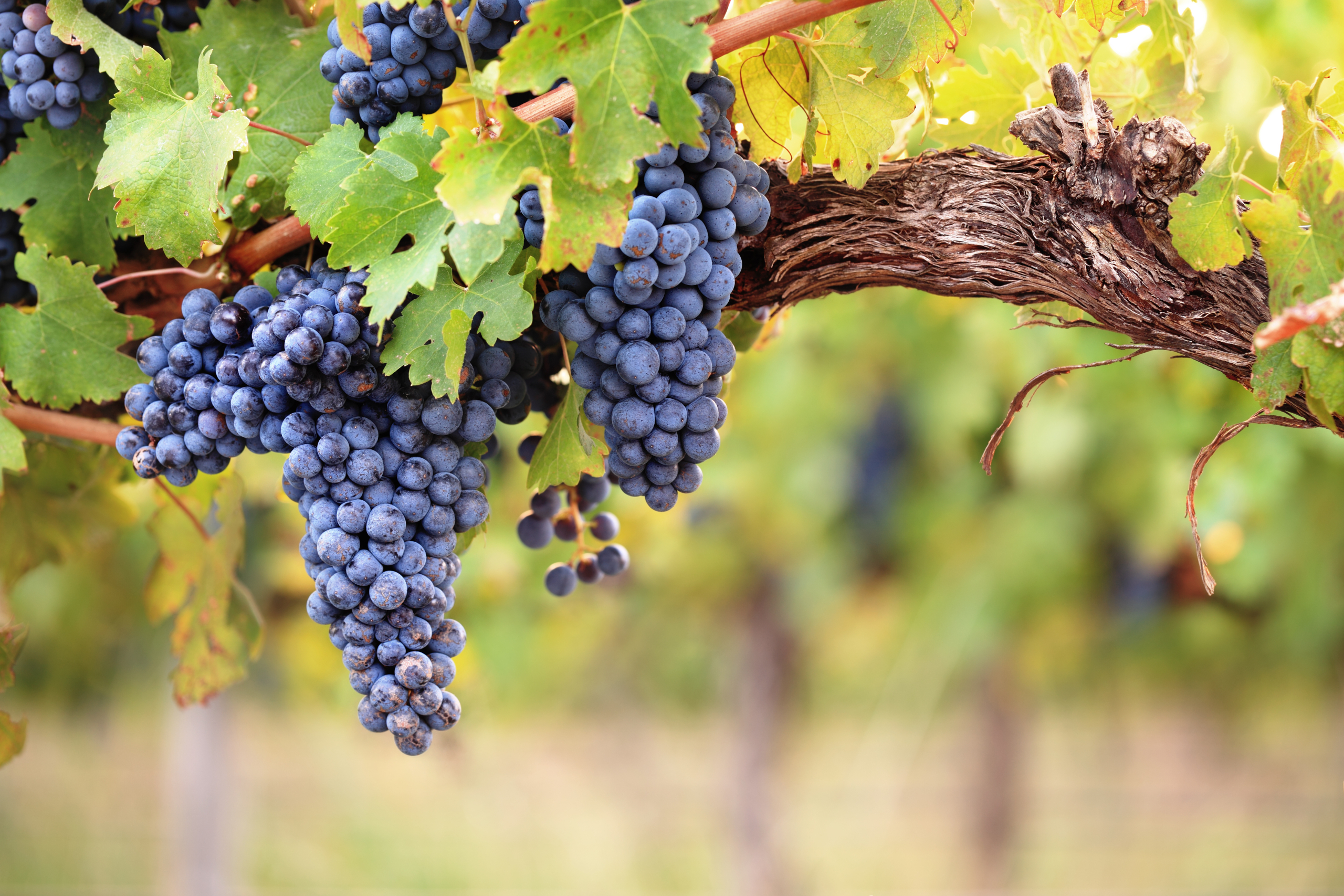
I suspect that if I held up a picture of Uncle Sam and asked everyone what country he symbolized, almost everybody I think would say, of course, “the United States.” And if I held up a picture of a hammer and a sickle and I asked which country it symbolized, most everyone here I suspect would say, “It’s Russia.” And if I held up a picture of a maple leaf and asked what country it symbolized most of you would probably say, “Canada.” But if I held up a picture of a grapevine and asked what country it symbolized, I suspect that some of you would not know.
If you happen to be a collector of old coins you might know because this country once stamped a grapevine on all their coins. If you happen to be a student of archaeology, you might know because the country often used the grapevine to decorate its buildings. And finally, if you happen to be a Biblical scholar or student of the Bible, you no doubt would know because the Bible often used the grapevine to symbolize this country. That country, you’ve probably guessed by now, is Israel. God’s first chosen people.
Consider just two examples of how the Bible used the vine to symbolize that nation. We hear in the Book of Psalms these words: “Oh Lord of the angels, Lord of hosts, a vine from Egypt you transplanted. You cleared the ground for it. It took root and it filled the land.”
Again, we hear in the Book of Isaiah the prophet, “The vineyard of the Lord of hosts is the House of Israel, and the men of Judah his cherished plant.”
It’s against this background that we hear our Lord’s words to us in today’s Gospel when Jesus says, “I am the true vine. You are the branches. Whoever remains in me and I in him will bear much fruit, but if you do not remain in me, you will not produce good fruit. Indeed, you will be cut off to wither, to die and be burned as a useless fruitless dead branch of the vine.”
What our Lord is clearly saying is that He is the new vine that God has planted in the world, and that if we are to become the people and the nation He wants us to be, we must remain united to him. If not there’s little hope for us and our lives and our community will end in spiritual tragedy. So, the message of the Lord today is very serious indeed.
Perhaps a story from a friend of mine from high school days will help. There were two guys in this class, and they were very close buddies. When you saw Bill, you would always see Thomas. They were always together, and they were well liked by everyone. What no one realized, when they were in high school was that one of them had a strong character and the other did not. As long as they were together, the one with the weak character was okay.
After high school, they went to different colleges. It was only a matter of time before Thomas fell into temptation and his life was in serious trouble before the first semester was halfway through. His family of course tried to help him, Thomas wouldn’t listen. When Bill finally heard what was going on he dropped everything he was doing at his campus. He went to Thomas’s campus. He intervened in the situation and then brought Thomas back home.
It was then that the weaker friend realized how much he had depended upon his friend in the past, and that his future depended, to some extent, upon maintaining contact with a stronger body and drawing strength from him even though apart in different schools. Of course, Thomas eventually grew, and he matured but he always maintained that it was Bill’s love and concern that saved him.
That’s something of the way it is with Jesus and each and every one of us. Precisely what the Lord is telling us in today’s Gospel. United to him we can do anything. Separated from him we can do nothing. Only by remaining connected to Christ — by prayer, by his teaching, and by the sacraments of his Church — will we bear fruit and grow into the person that God wants us to be, and also hopefully become a nation that is worthy of his love and his support.
More News
 https://www.rapidcitydiocese.org/wp-content/uploads/2026/08/Black-Elk-CRC-20-scaled.jpg
1707
2560
Becky Berreth
https://www.rapidcitydiocese.org/wp-content/uploads/2022/02/WebHeader22-1.png
Becky Berreth2026-08-18 11:00:172026-08-19 14:49:1350 years of ministry
https://www.rapidcitydiocese.org/wp-content/uploads/2026/08/Black-Elk-CRC-20-scaled.jpg
1707
2560
Becky Berreth
https://www.rapidcitydiocese.org/wp-content/uploads/2022/02/WebHeader22-1.png
Becky Berreth2026-08-18 11:00:172026-08-19 14:49:1350 years of ministry https://www.rapidcitydiocese.org/wp-content/uploads/2026/08/DSC_2729.jpg
630
1200
Becky Berreth
https://www.rapidcitydiocese.org/wp-content/uploads/2022/02/WebHeader22-1.png
Becky Berreth2026-08-15 11:00:032026-08-14 15:12:25Surgite Eamus Dinner Celebrates Vocations
https://www.rapidcitydiocese.org/wp-content/uploads/2026/08/DSC_2729.jpg
630
1200
Becky Berreth
https://www.rapidcitydiocese.org/wp-content/uploads/2022/02/WebHeader22-1.png
Becky Berreth2026-08-15 11:00:032026-08-14 15:12:25Surgite Eamus Dinner Celebrates Vocations https://www.rapidcitydiocese.org/wp-content/uploads/2026/06/Catechetical-Kickoff-2026-FB-Event-scaled.png
1440
2560
Becky Berreth
https://www.rapidcitydiocese.org/wp-content/uploads/2022/02/WebHeader22-1.png
Becky Berreth2026-08-14 11:00:352026-08-24 09:44:53Catechetical Kick-Off: A desire to grow in faith
https://www.rapidcitydiocese.org/wp-content/uploads/2026/06/Catechetical-Kickoff-2026-FB-Event-scaled.png
1440
2560
Becky Berreth
https://www.rapidcitydiocese.org/wp-content/uploads/2022/02/WebHeader22-1.png
Becky Berreth2026-08-14 11:00:352026-08-24 09:44:53Catechetical Kick-Off: A desire to grow in faith https://www.rapidcitydiocese.org/wp-content/uploads/2026/08/048A8410.jpg
1152
2048
Becky Berreth
https://www.rapidcitydiocese.org/wp-content/uploads/2022/02/WebHeader22-1.png
Becky Berreth2026-08-12 09:37:002026-08-12 14:20:32Dedication and Blessing of St. Rose of Lima
https://www.rapidcitydiocese.org/wp-content/uploads/2026/08/048A8410.jpg
1152
2048
Becky Berreth
https://www.rapidcitydiocese.org/wp-content/uploads/2022/02/WebHeader22-1.png
Becky Berreth2026-08-12 09:37:002026-08-12 14:20:32Dedication and Blessing of St. Rose of Lima https://www.rapidcitydiocese.org/wp-content/uploads/2026/03/Becoming-One-Banner.png
1080
1920
Becky Berreth
https://www.rapidcitydiocese.org/wp-content/uploads/2022/02/WebHeader22-1.png
Becky Berreth2026-08-11 11:00:172026-08-11 14:44:36A chance to reconnect
https://www.rapidcitydiocese.org/wp-content/uploads/2026/03/Becoming-One-Banner.png
1080
1920
Becky Berreth
https://www.rapidcitydiocese.org/wp-content/uploads/2022/02/WebHeader22-1.png
Becky Berreth2026-08-11 11:00:172026-08-11 14:44:36A chance to reconnect https://www.rapidcitydiocese.org/wp-content/uploads/2026/08/web-renewal-scaled.jpg
1440
2560
Becky Berreth
https://www.rapidcitydiocese.org/wp-content/uploads/2022/02/WebHeader22-1.png
Becky Berreth2026-08-07 11:00:252026-08-07 16:34:51Sr. Lorane Coffin, OSB, celebrates 75 years
https://www.rapidcitydiocese.org/wp-content/uploads/2026/08/web-renewal-scaled.jpg
1440
2560
Becky Berreth
https://www.rapidcitydiocese.org/wp-content/uploads/2022/02/WebHeader22-1.png
Becky Berreth2026-08-07 11:00:252026-08-07 16:34:51Sr. Lorane Coffin, OSB, celebrates 75 years https://www.rapidcitydiocese.org/wp-content/uploads/2026/08/IMG_7370-scaled.jpg
1440
2560
Becky Berreth
https://www.rapidcitydiocese.org/wp-content/uploads/2022/02/WebHeader22-1.png
Becky Berreth2026-08-05 11:47:312026-08-05 13:29:51Deacon Ben Black Bear celebrates 50 years
https://www.rapidcitydiocese.org/wp-content/uploads/2026/08/IMG_7370-scaled.jpg
1440
2560
Becky Berreth
https://www.rapidcitydiocese.org/wp-content/uploads/2022/02/WebHeader22-1.png
Becky Berreth2026-08-05 11:47:312026-08-05 13:29:51Deacon Ben Black Bear celebrates 50 years https://www.rapidcitydiocese.org/wp-content/uploads/2026/08/e9397c57-ac37-4337-a4e5-8f133751fc58-copy.jpg
784
1392
Becky Berreth
https://www.rapidcitydiocese.org/wp-content/uploads/2022/02/WebHeader22-1.png
Becky Berreth2026-08-04 11:00:442026-08-05 14:33:02Steubenville St. Paul 2026
https://www.rapidcitydiocese.org/wp-content/uploads/2026/08/e9397c57-ac37-4337-a4e5-8f133751fc58-copy.jpg
784
1392
Becky Berreth
https://www.rapidcitydiocese.org/wp-content/uploads/2022/02/WebHeader22-1.png
Becky Berreth2026-08-04 11:00:442026-08-05 14:33:02Steubenville St. Paul 2026 https://www.rapidcitydiocese.org/wp-content/uploads/2026/08/Website-Post-Header-aug-scaled.png
1442
2560
Becky Berreth
https://www.rapidcitydiocese.org/wp-content/uploads/2022/02/WebHeader22-1.png
Becky Berreth2026-08-03 15:23:232026-08-03 15:23:43Monthly Reflection by the Office of Faith Formation: August 2026
https://www.rapidcitydiocese.org/wp-content/uploads/2026/08/Website-Post-Header-aug-scaled.png
1442
2560
Becky Berreth
https://www.rapidcitydiocese.org/wp-content/uploads/2022/02/WebHeader22-1.png
Becky Berreth2026-08-03 15:23:232026-08-03 15:23:43Monthly Reflection by the Office of Faith Formation: August 2026