
Watch the Mass
Entrance Antiphon text from the Roman Missal ICEL on English in the Liturgy, Inc. All rights reserved. Music copyright Roman Missal/ICEL/Hardy Used with permission. Communion Antiphon is from St. Joseph – Jared Osterman: Communion Antiphon © 2018, Jared Ostermann, reproduced and streamed with permission. Excerpts from the English translation of The Roman Missal © 2010, International Commission on English in the Liturgy Corporation. All rights reserved. Responsorial Psalm © 2016 Royce Nickel. Licensed in the Creative Commons by-nc-nd 3.0. Crown Him With Many Crowns and Rejoice the Lord is King, reprinted and Streamed with Permission under ONE LICENSE, License #A-704305, and with permission from International Liturgy Publications. All rights reserved.
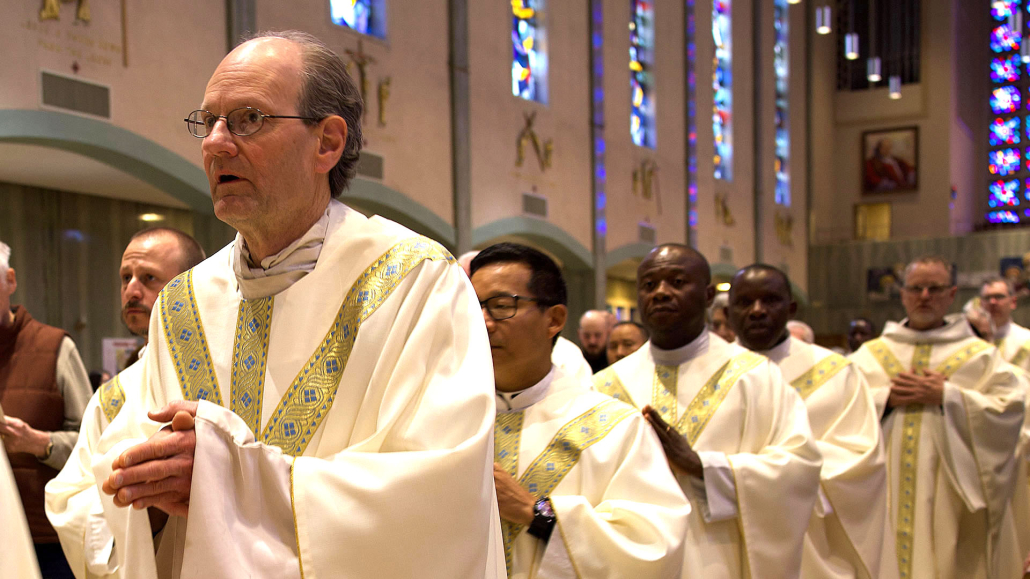
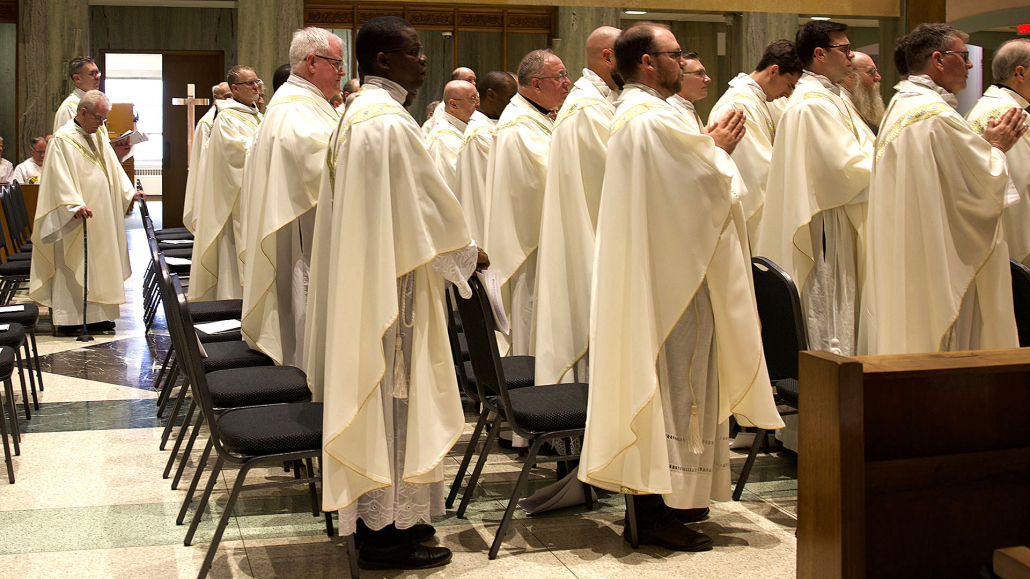
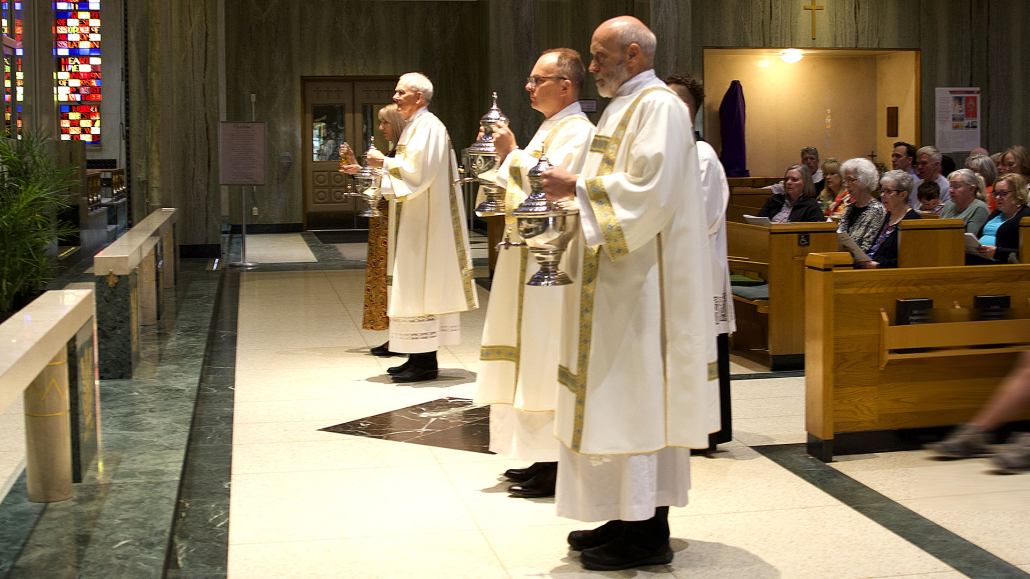
See photos from the Mass


Listen to the Homily
Bishop Scott Bullock
Homily from the Chrism Mass
Cathedral of Our Lady of Perpetual Help, Rapid City
March 30, 2026
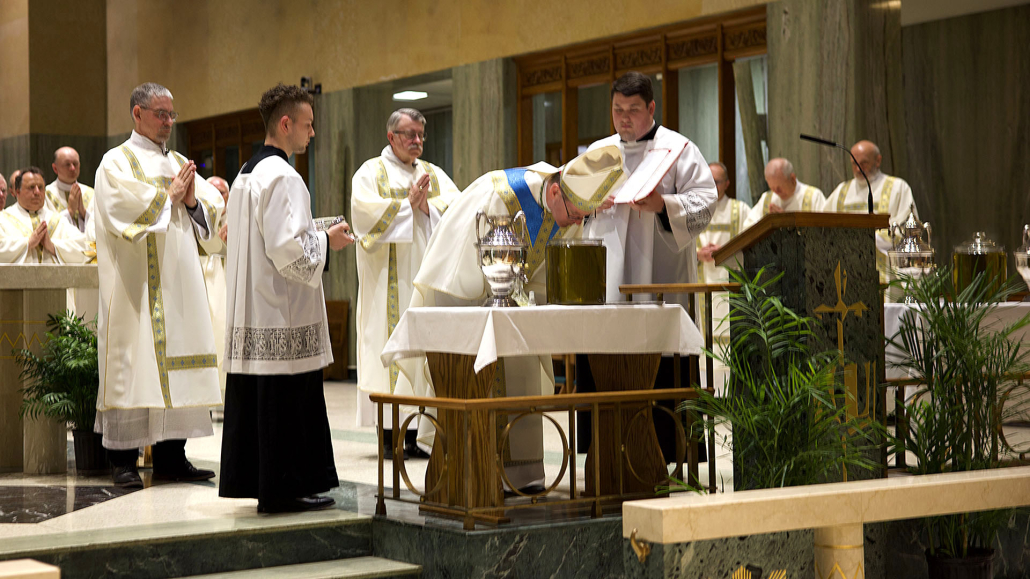
The “Ceremonial for Bishops” which includes a description of this Chrism Mass Liturgy, begins with these words, “This Mass, which the bishop concelebrates with his college of presbyters and which he consecrates the holy Chrism and blesses the other oils, manifests the communion of the presbyters with their bishop.”
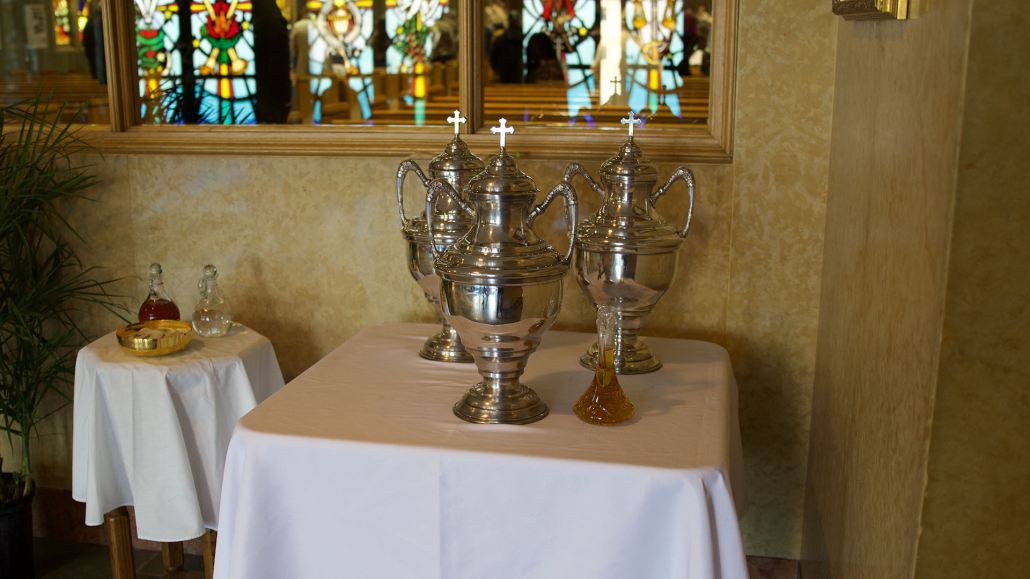
Together with this sign of unity among the priests and their bishop is the sign of the consecration of Chrism and blessing of the Oil of Catechumens and Oil of the Sick, which will be dispersed throughout the diocese as a sign of unity of sacred ministry all done in the name of Christ.
The Chrism Mass — we’ve been doing this for a while. The ancient Christian document, “Apostolic Tradition,” probably composed around the year 200, describes a “ceremony taking place during the Easter Vigil at which two holy oils were blessed and one is consecrated.” Now note, even by around the year 200 we’re talking about traditions. This goes back even farther. We’re going way back in what we’re doing today.
Associated with this ancient liturgy is, from the Gospel of Luke, that passage when, immediately following the temptation in the desert, Jesus returns to Galilee, enters the synagogue, and begins his mission to preach the good news. The act at the very heart of all ministry but, in particular, that of the priest. In this Gospel, Luke recounts how Jesus takes the scroll of the prophet Isaiah, unrolls it for reading, and chooses the passage which we have also heard today, Isaiah 61, the first three verses.
The passage, as recounted by Luke, begins this way, “The Spirit of the Lord is upon me, because he has anointed me …” Anointed. In the original biblical language is like that of our word Christ. Jesus is anointed, the Christ, the Messiah. The one anointed is consecrated to an office, that’s something ongoing, something permanent, some religious service. And, since it is God who anoints for this permanent office, the same Lord will continue to sustain those who are anointed for this continuing mission.
So, a closer look at the Gospel as to what this anointed person will do, could be in my estimation summarized by the word healing. Healing. The Gospel says that the spirit of the Lord is upon him, “to bring glad tidings to the poor.” Literally, to preach the good news of the Gospel. And who are the poor? The biblical word has the sense of being beggars. The ones who have nothing self-sufficient, who thus need sustenance to live. In this beautiful phrase, “to bring glad tidings to the poor,” we see both the role of the preacher, to proclaim with fidelity the saving message of Jesus, and the listeners, who are to come as beggars in complete need. With the sense that St. Peter utters elsewhere, “Master, to whom shall we go? You have the words of eternal life …” So, in our utter poverty, Jesus offers the healing of hope to the hopeless. That is the Gospel. The preaching, however, can only be received fruitfully by hearts of beggars who are destitute without God!
The Gospel continues that the Anointed One is, “to proclaim liberty to captives.” Here, the biblical text has the sense of captives as being prisoners of war. While the liberty is that of freedom; (figuratively) pardon — deliverance, forgiveness, liberty, remission. We prisoners of war know all about this don’t we? For we have been battered by the warring forces of this world — the degradation of the human person, the too frequent recourse to war as a so-called remedy for human ills, the avalanche of things offered by this world that, in reality, seem to deplete us. We prisoners of the war for our souls know that we are held captive, and it’s a captivity often of our own making. We need a freedom that is pardon, forgiveness, and remission of sin that Christ offers in the only way that he can as the only sense of liberty — the freedom of the sons and daughters of God. Our anointed, our priests, are especially dedicated to this type of freedom — pardon, forgiveness and the remission of sin. Delivering us, we prisoners, into the freedom of the sons and daughters of God.
The same anointed is to preach, “recovery of sight to the blind.” The biblical sense of that blindness is like being in a smoke screen. We can’t see until we are able to lift up our heads. Recovery of sight suggests seeing the God who has created us. In essence, the Anointed One can proclaim the healing of a blindness by showing us the things as God which is what each of our hearts looks for. We who are too often blinded from seeing things as they truly are. We have been deceived. We’ve let ourselves be deceived, by a smoke screen of falsity that impairs our vision as sons and daughters of God, from the truth that we have a good God, that we are his beloved. In our blindness, we need to be delivered from this smoke screen, and we have a savior who is ready to do it — the Anointed One who bears life to this world
The same anointed, the Gospel continues, is to, “let the oppressed go free.” The oppressed in the biblical word are literally the bruised, wounded, hurt. The remedy, again, is the liberty of God’s forgiveness and mercy. In the secret place of all of our hearts, we know we are bruised. We need deliverance from this too-often bruising course of our lives, bruised by grief, trauma, regret, or guilt. And we discover this healing by the Holy Spirit in the midst of the Church.
So, here, in these first words of preaching by our savior, we see the very heart of the priestly mission: to preach the gospel of salvation, to offer forgiveness, and to strengthen God’s people with the food of the Eucharist. What sacred, important work for us these priests offer. What sacred, important work for us poor, blind, captive beggars in this world!
The Chrism with which we anoint the baptized, those confirmed, and the ordained, perpetuate this office of mercy inaugurated by Christ and proclaimed in that synagogue of Nazareth, and will be consecrated for renewed service to the healing ministry of our priest and our church. Furthermore, today in a particular way, our priests renew their ordination promises, and to be united closely to the Anointed One, Jesus Christ. To continue, with God’s help, to fulfill their priestly office of healing that God wills for us poor, blind, captive beggars.
But notice when they renew their promises in just a moment that there’s a second part of the renewal — the charge of me, the bishop, to pray to God for our priests, especially that they’ll have the gifts of the Spirit that they’ll needed for faithful execution of their priestly office of healing mercy, “so that they may lead you to him, who is the source of salvation.”
From the earliest days of our Church and our faith until today, the promises of the Lord for healing and salvation are provided through the important, essential ministry of those configured to the Anointed One, Jesus Christ, through a sacramental anointing that is ordination.
Mother Mary, Mother of Priests, may your prayers more closely configure our priests to Christ, the Anointed One, the only one that can bring vision, deliverance, and hope to hearts and souls in need.
Our Lady of Perpetual Help, pray for us.
