

The Mystery of the Eucharist
Bishop Peter Muhich
Homily from the Televised Mass, NewsCenter1
Solemnity of the Most Holy Body and Blood of Christ (Corpus Christi), June 11, 2023
“The one who feeds on me will have life because of me.”
Summer has finally arrived here in western South Dakota after a long winter. School’s been out for about a week for most students, at least here in Rapid City, and we’ve had some nice warm days and we look forward to much more warm weather to come. And of course, this year everything is green because of the snows and then the rains of spring. First time as bishop I’ve seen prairie green like this in my time here. It’s beautiful to behold.
This is a good time of year for today’s Feast of the Most Holy Body and Blood of Christ because the Eucharist is all about new life. The Eucharist sustains in us the eternal spring and summertime of heaven. The mystery of the Eucharist in our lives is reflected in something we see out in nature this time of year. How a seed springs to life and grows whether it’s out in our fields or in our home gardens. It’s a good time and a good concept to think about as we try to take in, on this Feast of Corpus Christi, the enormous mystery of the Eucharist.
Let’s think about a seed and what happens to a seed when it’s planted. First of all, a seed is really lifeless until it falls into the ground and dies, is buried. It has potential for life within itself but cannot bring itself to life. It cannot achieve life on its own, but once it dies and is buried in the ground it can begin to grow. The soil and the rain energize it and bring it to life. And the sun’s warmth and energy make it grow and bear fruit. What we see happening in our fields and in our gardens in nature, takes place in us spiritually when we come to the Eucharist while prepared with hearts and minds open to Jesus Christ and his power to transform us. And then when we receive him worthily, in this most profound of the Church’s Seven Sacraments. So profound is the Eucharist it contains the other six, and it is the source and summit of the whole life of the Church.
You and I, on this Feast of Corpus Christi, are like seeds. We do not have within ourselves, our own principle of life. We must humble ourselves and die to ourselves in order to find life. Jesus clearly taught us that. We have the potential for spiritual life within us because we’re created in God’s image and likeness, but we can’t achieve this spiritual life on our own. But once we die to ourselves and are buried with Christ in Baptism, we receive life and begin to grow now placed in the right soil for that to happen. In a state of grace. In a friendship, a good relationship with the Lord. The grace of Baptism and the Word of God that rains down on us in the scriptures, and especially the Body and Blood of Christ that are given to us in the Eucharist, energize us and cause us to grow.
And that light of the Eucharist and God’s grace that radiates within us when we receive Jesus in the Eucharist and then through our lives, if we cooperate with the grace of the sacrament, living uprightly, doing good, turning to the Lord regularly in times of prayer, it will cause us to go and bear much fruit. So, there’s a great parallel between what we see in nature with seeds and what we see in us as we come to life in Christ.
The Eucharist is an infinite and unique source of nourishment for us because Christ gives himself to us this food in this mystery. Christ is food that transforms us into his likeness. Unlike regular food that we eat and transform into ourselves, when we consume the Eucharist Christ transforms us into himself the more we cooperate with his presence in our lives. In the Eucharist, we consume the very Lord of Life himself and our nourished on his divine life. Because of this, there is nothing that compares to the Eucharist in all of reality in the life of the Church. That’s why the Church continually points us towards the Eucharist and tells us how important this is in our lives. The Sunday Eucharist anchors the whole life of the Church and gives it the energy to do its saving work in the world.
So as we celebrate this Feast of Corpus Christi, especially as we enter into the second year of the Eucharistic revival that we bishops in the United States have said is our priority for this three-year period. We’re emerging from the diocesan year when we did things on the diocesan level to kind of get people ready and give them resources, bringing in speakers, and having the Eucharistic procession here in Rapid City. Now we transition into the parish year, when things will happen more locally in your parishes, to bring attention to this greatest and the sacraments.
A little bit of a lesson in how to receive the Lord on this Feast of Corpus Christi as we enter the parish year. First of all, because it’s such an awesome gift, prepare yourself. We shouldn’t come unworthy to the Eucharist. If you’ve committed a serious sin, go to confession. Pray. Fast for an hour before you receive Communion. And participate actively in Mass. Don’t be inert. Don’t be passive. Heaven is touching earth when we celebrate the Mass. And then when it’s time for Communion come forward reverently. Bow as the person in front of you receives the Lord and leaves from that place in front of the priest or the Eucharistic minister. Bow before you go up, and then receive your crucified and risen Lord reverently — either in the hand by forming an altar for him, or on the tongue. And make sure to say, “Amen,” which is the proper response. It means “I believe. I believe in Jesus Christ in the Eucharist.” Now give thanks in your pew when you return after receiving Communion, and of course, plan on your life changing. Live according to what you have received.
“The one who feeds on me,” Jesus says, “will have life because of me.” If we’re open to the mystery of the Eucharist that will happen in you and in me.
More writings from Bishop Peter
 https://www.rapidcitydiocese.org/wp-content/uploads/2024/09/father-dan-candles-scaled.jpg
1440
2560
Becky Berreth
https://www.rapidcitydiocese.org/wp-content/uploads/2022/02/WebHeader22-1.png
Becky Berreth2024-09-11 11:35:482024-09-16 13:26:42“A faithful priest”
https://www.rapidcitydiocese.org/wp-content/uploads/2024/09/father-dan-candles-scaled.jpg
1440
2560
Becky Berreth
https://www.rapidcitydiocese.org/wp-content/uploads/2022/02/WebHeader22-1.png
Becky Berreth2024-09-11 11:35:482024-09-16 13:26:42“A faithful priest” https://www.rapidcitydiocese.org/wp-content/uploads/2022/06/sd-banner.jpg
1080
1920
Becky Berreth
https://www.rapidcitydiocese.org/wp-content/uploads/2022/02/WebHeader22-1.png
Becky Berreth2024-06-24 10:00:142024-06-25 11:13:31SDCC — Anniversary of the Dobbs Decision
https://www.rapidcitydiocese.org/wp-content/uploads/2022/06/sd-banner.jpg
1080
1920
Becky Berreth
https://www.rapidcitydiocese.org/wp-content/uploads/2022/02/WebHeader22-1.png
Becky Berreth2024-06-24 10:00:142024-06-25 11:13:31SDCC — Anniversary of the Dobbs Decision https://www.rapidcitydiocese.org/wp-content/uploads/2024/06/1-Banner-scaled.jpg
1444
2560
Becky Berreth
https://www.rapidcitydiocese.org/wp-content/uploads/2022/02/WebHeader22-1.png
Becky Berreth2024-06-11 16:19:072024-06-12 16:33:27Diocesan Marian Consecration Mass
https://www.rapidcitydiocese.org/wp-content/uploads/2022/06/sd-banner.jpg
1080
1920
Jacques Daniel
https://www.rapidcitydiocese.org/wp-content/uploads/2022/02/WebHeader22-1.png
Jacques Daniel2024-06-06 10:00:122024-06-06 11:48:24SDCC — Certification of Marijuana Amendment
https://www.rapidcitydiocese.org/wp-content/uploads/2022/06/sd-banner.jpg
1080
1920
Becky Berreth
https://www.rapidcitydiocese.org/wp-content/uploads/2022/02/WebHeader22-1.png
Becky Berreth2024-05-21 11:47:582024-05-21 11:47:58SDCC — Certification of Abortion Amendment
https://www.rapidcitydiocese.org/wp-content/uploads/2024/06/1-Banner-scaled.jpg
1444
2560
Becky Berreth
https://www.rapidcitydiocese.org/wp-content/uploads/2022/02/WebHeader22-1.png
Becky Berreth2024-06-11 16:19:072024-06-12 16:33:27Diocesan Marian Consecration Mass
https://www.rapidcitydiocese.org/wp-content/uploads/2022/06/sd-banner.jpg
1080
1920
Jacques Daniel
https://www.rapidcitydiocese.org/wp-content/uploads/2022/02/WebHeader22-1.png
Jacques Daniel2024-06-06 10:00:122024-06-06 11:48:24SDCC — Certification of Marijuana Amendment
https://www.rapidcitydiocese.org/wp-content/uploads/2022/06/sd-banner.jpg
1080
1920
Becky Berreth
https://www.rapidcitydiocese.org/wp-content/uploads/2022/02/WebHeader22-1.png
Becky Berreth2024-05-21 11:47:582024-05-21 11:47:58SDCC — Certification of Abortion Amendment https://www.rapidcitydiocese.org/wp-content/uploads/2024/02/vigil-screen-1.png
1024
1820
Becky Berreth
https://www.rapidcitydiocese.org/wp-content/uploads/2022/02/WebHeader22-1.png
Becky Berreth2024-02-27 14:42:572024-02-29 14:44:14Vigil Services for Bishop Peter Muhich
https://www.rapidcitydiocese.org/wp-content/uploads/2024/02/vigil-screen-1.png
1024
1820
Becky Berreth
https://www.rapidcitydiocese.org/wp-content/uploads/2022/02/WebHeader22-1.png
Becky Berreth2024-02-27 14:42:572024-02-29 14:44:14Vigil Services for Bishop Peter Muhich https://www.rapidcitydiocese.org/wp-content/uploads/2024/02/bishop-banner-copy-copy.jpg
1080
1920
Becky Berreth
https://www.rapidcitydiocese.org/wp-content/uploads/2022/02/WebHeader22-1.png
Becky Berreth2024-02-17 11:02:592024-02-21 17:00:01Bishop Peter M. Muhich funeral services announced
https://www.rapidcitydiocese.org/wp-content/uploads/2024/02/bishop-banner-copy-copy.jpg
1080
1920
Becky Berreth
https://www.rapidcitydiocese.org/wp-content/uploads/2022/02/WebHeader22-1.png
Becky Berreth2024-02-17 11:02:592024-02-21 17:00:01Bishop Peter M. Muhich funeral services announced https://www.rapidcitydiocese.org/wp-content/uploads/2024/02/Morning-Star-Thumbnail-49-e1708040887334.jpg
555
1000
Becky Berreth
https://www.rapidcitydiocese.org/wp-content/uploads/2022/02/WebHeader22-1.png
Becky Berreth2024-02-15 15:55:232024-02-21 11:38:39Novena for Bishop Peter
https://www.rapidcitydiocese.org/wp-content/uploads/2024/02/Morning-Star-Thumbnail-49-e1708040887334.jpg
555
1000
Becky Berreth
https://www.rapidcitydiocese.org/wp-content/uploads/2022/02/WebHeader22-1.png
Becky Berreth2024-02-15 15:55:232024-02-21 11:38:39Novena for Bishop Peter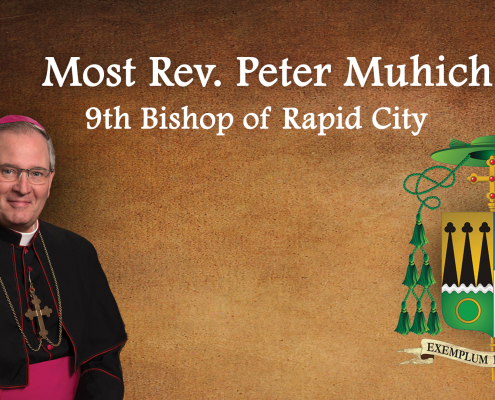 https://www.rapidcitydiocese.org/wp-content/uploads/2024/02/bishop-banner-copy.jpg
1080
1920
Becky Berreth
https://www.rapidcitydiocese.org/wp-content/uploads/2022/02/WebHeader22-1.png
Becky Berreth2024-02-14 15:45:362024-02-15 13:25:52Bishop Peter M. Muhich to Enter Hospice Care
https://www.rapidcitydiocese.org/wp-content/uploads/2024/02/bishop-banner-copy.jpg
1080
1920
Becky Berreth
https://www.rapidcitydiocese.org/wp-content/uploads/2022/02/WebHeader22-1.png
Becky Berreth2024-02-14 15:45:362024-02-15 13:25:52Bishop Peter M. Muhich to Enter Hospice Care