By Bishop Scott Bullock
What great nation has statutes and ordinances that are as just as this whole law which I am setting before you today? (Deuteronomy 4:8)
The greatest of the prophets of the Old Testament, Moses, reminded the people that their greatness as a nation was evident because of the just laws that governed their common life. For laws by their nature codify shared values by which a nation chooses to govern itself for the common good. Two potential laws on this November’s election ballot challenge us to determine, as South Dakotans, whether we will in fact choose to govern ourselves in ways of justice that will truly reveal greatness in us, or fail in this noble aim.
We are indeed drawing near to an important election, with its expected drumbeat of political ads on behalf of candidates and ballot measures. It’s often the case that campaign ads are uninformative and not very edifying. The combative tone of our political culture, especially on social media, causes some Christians to want to withdraw entirely from politics, thinking that it is too worldly, corrupt, or “dirty.” We are all tempted to say, “I can’t wait until this is over!” This sentiment can lead to an excessive distancing of ourselves from our political process, longing for a return to a level of peace once the elections are over. And yet, the two measures that are currently on the ballot threaten not a return to anything resembling normalcy, but instead along a course that will markedly change our way of life as South Dakotans.
In the face of such a possibility, our calling cannot therefore be to flee the political realm, but rather to engage it, to enlighten and transform it with the truths of the Gospel. St. John Paul II wrote, “Man is called to a fullness of life which far exceeds the dimensions of his earthly existence, because it consists in sharing the very life of God. The loftiness of this supernatural vocation reveals the greatness and the inestimable value of life even in its temporal phase.” (Evangelium Vitae, 2). While our gaze is ultimately fixed on things eternal, this does not make things of this world — such as politics — unimportant or beneath our dignity. On the contrary, it is precisely man’s “supernatural vocation” that helps us understand human dignity and reminds us of our serious duty to protect it. That duty extends to our involvement in public life.
In the November 5 election, there are indeed two ballot measures that could have a profound impact on the dignity of human life and the common good of South Dakotans. I will share brief reflections on each of these.
The first is Initiated Measure 29, which proposes to legalize marijuana for so-called “recreational” purposes. Many people have become convinced that marijuana is a harmless drug. Yet a growing body of evidence contradicts this belief.
In states that have legalized recreational marijuana, the following effects have been documented: increased rates of drugged driving accidents and fatalities; increased marijuana-related calls to poison-control centers and visits to emergency rooms; and increased marijuana use by minors, which can be particularly harmful to their physical and mental health. The U.S. Surgeon General has warned that use of marijuana during adolescence is associated with a host of negative effects: impaired learning; poor school performance; increased rates of school absences and drop-outs; more suicide attempts; and higher risk of mental health problems, including psychotic disorders such as schizophrenia. When our society condones these damaging effects, none of us will be left untouched.
The experience of Colorado, one of the first states to legalize marijuana, was the subject of a 2023 pastoral letter by Archbishop Samuel Aquila of Denver. Archbishop Aquila writes, “In Colorado, we are now a decade into this experiment. As more studies come out … we now have an overwhelming amount of data that reinforces what we have known to be true all along: the legalization of marijuana and cultural acceptance of drug use have been disastrous to our society.” With a legalization of marijuana in South Dakota, we have no reason to believe that the effects will be any less disastrous in our families and communities.
This year, in addition to South Dakota, proposals to legalize recreational marijuana are on the ballot in North Dakota and Florida. The Catholic bishops in both states have urged the faithful to oppose marijuana legalization. I join Bishop Donald DeGrood of the Diocese of Sioux Falls in likewise urging West River Catholics to vote “no” on Initiated Measure 29.
The second is Amendment G, the proposal to add a “right to abortion” to the state constitution. It has often been said a society will be judged by how it treats its weakest and most vulnerable members. Children in the womb are certainly weak and vulnerable, yet Amendment G will by the fact of its adoption overturn all laws in South Dakota that are intended to protect them.
Passage of Amendment G would impose an abortion law that is far more radical even than what was in place under Roe v. Wade, enshrining in our constitution the right to an abortion at any stage of a pregnancy. Many common-sense laws, such as a requirement that women be informed about the risks of abortion before obtaining one, would be deemed unconstitutional under the language of Amendment G. Laws that prevent women from being pressured or coerced into abortions they do not want would also be thrown out by Amendment G.
Pope Francis has said, “Every child who, rather than being born, is condemned unjustly to being aborted, bears the face of Jesus Christ, bears the face of the Lord, who even before he was born, and then just after birth, experienced the world’s rejection.” Jesus himself told us that whatever we do to the “least brothers (and sisters) of mine,” we do to Him (Mt 25:40). Understood correctly, our vote on Amendment G is a referendum on whether we welcome or reject Jesus in the vulnerable child in the womb.
Let us come to the defense of God’s precious gift of life in the least of us, the child in the womb, by voting “no” on Amendment G.
In the Gospel of John (10:10), Christ tells us, “I came so that they might have life and have it more abundantly.” Our Church desires that all men, women and children experience this abundant life, which allows them to truly flourish as human beings. As South Dakotans, we have been given the right through our votes, to determine the laws that will govern us. As people of faith, in the upcoming elections with potentially disastrous laws in the balance, we simply cannot “sit this one out.” Let us pray that the Holy Spirit will endow the voters of South Dakota with the wisdom they need to see these two ballot measures for what they are—laws that threaten and undermine human flourishing—and reject them. On Election Day, let us all do our part to pursue the greatness that comes from a state where just laws protect life and seek the common good.


 https://www.rapidcitydiocese.org/wp-content/uploads/2026/08/bishop-august-column-scaled.jpg
1440
2560
Becky Berreth
https://www.rapidcitydiocese.org/wp-content/uploads/2022/02/WebHeader22-1.png
Becky Berreth2026-08-19 15:13:102026-09-03 08:31:12The Great Depression and the New Deal
 https://www.rapidcitydiocese.org/wp-content/uploads/2026/07/industrial-revolution-scaled.jpg
1440
2560
Becky Berreth
https://www.rapidcitydiocese.org/wp-content/uploads/2022/02/WebHeader22-1.png
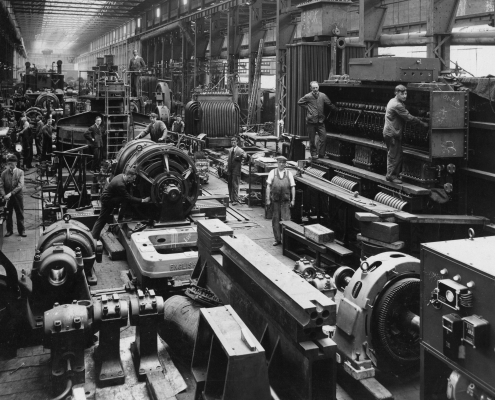
Becky Berreth2026-07-21 09:00:482026-07-21 12:05:08Pope Leo XIII, Rerum Novarum, and the Industrial Revolution
 https://www.rapidcitydiocese.org/wp-content/uploads/2026/06/6-rite.jpg
1080
1920
Becky Berreth
https://www.rapidcitydiocese.org/wp-content/uploads/2022/02/WebHeader22-1.png
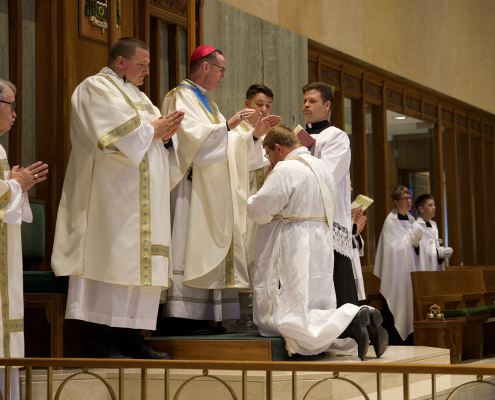
Becky Berreth2026-06-23 16:19:212026-06-23 16:32:04Welcome to the priesthood Father Todd VanderMay
 https://www.rapidcitydiocese.org/wp-content/uploads/2026/06/chains_26555bc-copy-scaled.jpg
1440
2560
Becky Berreth
https://www.rapidcitydiocese.org/wp-content/uploads/2022/02/WebHeader22-1.png
Becky Berreth2026-06-17 12:03:072026-06-17 14:43:39Catholics and Slavery, Abolition, and the Civil War
 https://www.rapidcitydiocese.org/wp-content/uploads/2026/06/happy.jpg
1080
1920
Becky Berreth
https://www.rapidcitydiocese.org/wp-content/uploads/2022/02/WebHeader22-1.png
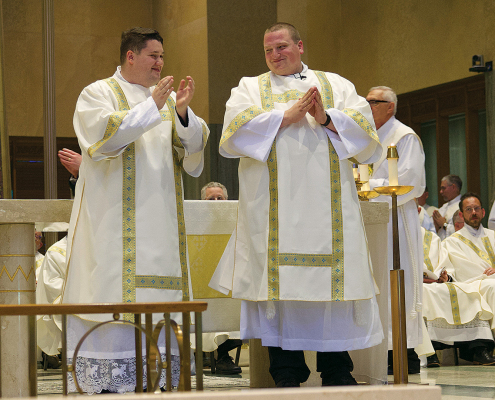
Becky Berreth2026-06-02 09:28:232026-06-18 11:46:25Ordination of Josiah Hanson and Blane Schriock to the Transitional Diaconate
 https://www.rapidcitydiocese.org/wp-content/uploads/2026/04/bishops-column-logo-copy.jpg
1080
1920
Becky Berreth
https://www.rapidcitydiocese.org/wp-content/uploads/2022/02/WebHeader22-1.png
Becky Berreth2026-05-20 09:31:422026-05-20 09:33:50‘Acts of outright bigotry and violence were not uncommon’
 https://www.rapidcitydiocese.org/wp-content/uploads/2026/05/vicariate-map-slide-copy-scaled.jpg
1440
2560
Becky Berreth
https://www.rapidcitydiocese.org/wp-content/uploads/2022/02/WebHeader22-1.png
Becky Berreth2026-05-02 11:00:252026-04-30 17:00:22Restructuring the Presbyteral Council, Vicariates
 https://www.rapidcitydiocese.org/wp-content/uploads/2026/04/2Q9A9893.jpg
1152
2048
Becky Berreth
https://www.rapidcitydiocese.org/wp-content/uploads/2022/02/WebHeader22-1.png
Becky Berreth2026-04-27 11:00:382026-05-11 11:59:07Clergy Assignments 2026
