
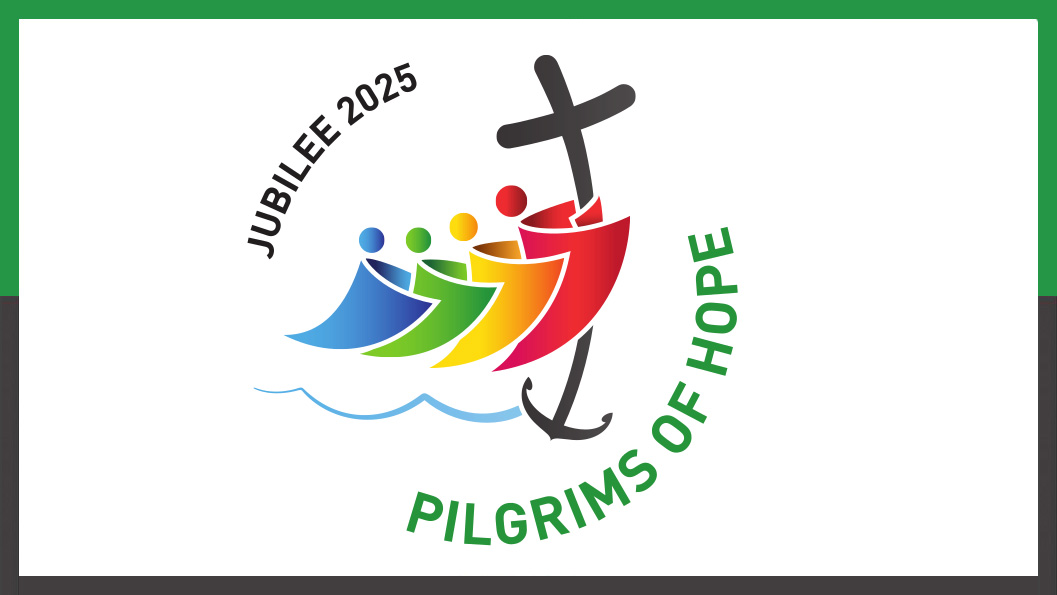

Opening The Year of Hope
Brothers and Sisters in Christ:
One of the most renowned and, in many ways, challenging saints of the last century is the Italian Franciscan mystic and stigmatist, St. Pius of Pietrelcina (1887-1968), commonly known as “Padre Pio.” Ascribed to this saint is this seemingly simple expression of wisdom for the Christian: “Pray, hope and don’t worry.” However simple it might sound, appearances can be deceptive! For with a few words, Padre Pio encapsulated the essence of the Christian life and has, as we begin a Jubilee Year of Hope, set the perfect course that we can all adopt in the next year, and beyond!
For first he asks us to pray. While saints and sinners alike have proposed the “how” of prayer, what is in common of them all is the directing of our hearts, minds and lives away from ourselves and toward our God, a God who desires communion with us. With the focus on our God, who is all sufficient, our insufficient selves can find deliverance from the self-focus that often leaves us hope-less. Hence, prayer is the key to hope, the second movement that St. Pius of Pietrelcina describes. Furthermore, when we are filled with hope, the result will be the vanquishing of worry. For authentic, divine hope forces out worry with a well-founded confidence that we are in communion — from now to eternity — with a God who has us squarely in His hands.
Pope Francis, in his Bull of Indiction of the Ordinary Jubilee Year 2025 entitled Spes Non Confundit (“Hope Does Not Disappoint”), begins his reflection by quoting from what some might call the “Christian Charter of Hope,” the 5th chapter of St. Paul’s Letter to the Romans. Therein, St. Paul lays out his sublime analysis of the virtue of hope, saying, “Since we are justified through faith, we have peace with God through our Lord Jesus Christ, through whom we have obtained access to this grace in which we stand; and we boast in our hope of sharing in the glory of God … Hope does not disappoint, because God’s love has been poured into our hearts through the Holy Spirit that has been given to us” (Rom 5:1-2.5). Notice that faith is the precursor to hope (“Since we are justified by faith …”), which produces the peace that comes from our hope in sharing the glory of God. St. Paul continues by reminding us that hope arises when God’s love is poured into our hearts through the gift of the Holy Spirit. In the end, both saints travel the same path. St. Pius prescribes this movement: prayer+hope+freedom from worry. St. Paul’s path is essentially the same: Faith+hope+peace in the Holy Spirit.
The preparation for hope: Prayer
The Catechism of the Catholic Church identifies prayer as the necessary preparation for our reception of the gift of hope (CCC 2657). Our Catholic faith identifies two general forms of the prayer that is the sine qua non for hope: public prayer and private prayer. Public prayer includes that formal prayer of our Church that we would also call “liturgy.” From its Greek-language roots, this word is often translated literally, “the work of the people [of God].” While work can be at times a drudgery (cf. Gn 3:17-19), with the assistance of the Holy Spirit, it becomes a burden that is light (cf. Mn 11:28-30). Furthermore, it is a work with and for others. Not only is your completion of the work of liturgy through your attendance at weekly Mass (our most frequent work of liturgy) a path to your personal hope, but your faithful witness of your participation at Mass on Sundays and Holy Days is a sign of hope to your sisters and brothers, including your bishop! As the new bishop of the Diocese of Rapid City, I have presided at Mass at many of our parishes. Some of the Masses were well-attended, while others were less so. While this is not an experience specific to western South Dakota, I have found across the course of my priesthood that we must not underestimate the encouragement we offer others when we attend Mass together with them. And — when you — and others — are missing from the community, it is a discouragement to others. I implore you: regularly come to the Eucharist — as a way to increase hope in yourself and, at the same time, be an encouragement to others!
In addition, we rely on our private (personal) prayer to build the foundation for hope through a daily turning from our insufficient selves to our all-sufficient God. I find a special source of hope comes when I begin the day in prayer, dedicating the day to the Lord and, at the same time, recalling that I need not be the “lord” of my day since there is Another who is Lord! In this, I am daily restored in a hope that comes from my Savior! In this vein, allow me to make a special appeal for all to take recourse to the intercession of the saints and especially the Mother of our God! Once again, by inviting these friends of Christ into my prayer, I can easily transcend my meager individual resources and rely upon the merits and intercession of the great company of saints. As I reminded us at the Evening Prayer the evening before my Ordination last September, the surest way to Christ is through the Mother of God! I invite you to embrace the prayer that has been a power for generations, the Rosary. Each time we call on “Holy Mary, Mother of God” she opens us to her certain and powerful intercession — and the sure and certain hope that comes from her maternal care.
The gift of hope is poured into our hearts — a theological virtue
While indeed hope is a gift God pours into our hearts, at the same time our tradition speaks of hope — together with faith and love — as a theological virtue. A virtue is an acquired habit, acquired through practice that, over time, becomes ingrained, a second nature. As a theological virtue (as contrasted to a human virtue), this habit is “infused by God into the souls of the faithful to make them capable of acting as his children and of meriting eternal life.” (CCC 1813). As such, we ought to regularly both prayerfully ask for the virtue of hope and then, once received, practice it, so that it might take root in our souls. The resulting fruits of the theological virtue of hope are freedom from worry and, as Pope Francis highlights, patience.
Regarding the practice of the virtue of hope, Pope Francis, in his Bull Spes Non Confundit (SNC), describes what he calls “signs of hope” — actions that both hone the virtue in each individual believer and, at the same time, witness to the hope that we find in Christ alone. Pope Francis then invites us to increase this hope through actions that show any of the following: a desire for peace (SNC #8); a renewed reverence for life (SNC #9); and a concern for prisoners (SNC #10), the sick (SNC #11), the young (SNC #12), the migrant (SNC #13), the elderly (SNC #14), and the poor (SNC #15). As this Jubilee Year of Hope is meant for the increase of hope in an often hope-starved world, I charge the people of our diocese to take on a commitment during this year to manifest one of these signs of hope as your concrete observance of this Jubilee Year of Hope.
One final distinction seems necessary as we, the people of the Diocese of Rapid City, join the Universal Church in an observance of a Jubilee Year of Hope. For us Christians, hope has an understanding distinct from its more common sense. Recently, I was in discussion with a young man who, regarding a complicated aspect of our faith, posed this question to me: “Do you know that to be true, or do you just hope it is true?” My reply: “yes!” In other words, for the Christian, our hope in Christ, and because it is in Christ, is sure and certain. On his authority, his promises for which we hope, though yet not fully realized, are sure and certain — and so we know that his promises, for which we hope, are also true! So, when we speak of “hope,” we speak of a truth that is sure and certain — because they are promises of Christ.
A peace the world cannot give
I began this letter by citing the example of one of our saints, St. Pius of Pietrelcina, who advised us along this path: Pray, hope, and don’t worry. Another name for freedom from worry is peace. As evidence of this peace, founded in prayer and the fruit of the theological virtue of hope, let me conclude by posing another role model of hope, a native son of our Diocese, Servant of God Nicholas Black Elk (1865-1950). This brother in Christ knew profound suffering in his life. Along the course of his extraordinary life as a Lakota, he was present at the Battle of Little Big Horn, the Wounded Knee Massacre, and other indignities that were visited upon his people. And yet — he remained hopeful. How did he do it? Clearly, he had been given the divine virtue of hope. In writing to his sisters and brothers in 1917 on the Rosebud Reservation, he expressed his confident hope in God when he said, “While we’re still living on earth, we should be thankful to God for putting us here on this earth. And God has promised us a place when we die, and I’m pretty sure he’ll never forget us.” And in another letter to the same Rosebud community at Christmas, he concluded his message, “May you have hope.” For he discovered in faith what Christ Jesus himself has promised — a peace that only the Lord can give: “Peace I leave with you; my peace I give to you. Not as the world gives do I give it to you. Do not let your hearts be troubled or afraid” (Jn 14:27).
Traditionally, a Jubilee Year is a year of deliverance for those who have been long enslaved by debt, sin or some other thing that oppresses us and keeps us from life. Pope Francis concludes his teaching on this Jubilee Year of Hope by directing us to the intercession of our Blessed Mother as a means of liberation. He writes, “In the travail of that sorrow [of the suffering and death of Jesus], offered in love, Mary became our Mother, the Mother of Hope. It is not by chance that popular piety continues to invoke the Blessed Virgin as Stella Maris [Star of the Sea], a title that bespeaks the sure hope that, amid the tempests of this life, the Mother of God comes to our aid, sustains us and encourages us to persevere in hope and trust” (SNC #24). May the prayers of our Mother Mary, Stella Maris, deliver us from the tempests of life and lead us with confidence to the merciful heart of her Son and our Savior!
Given on December 29, 2024.
+Most Rev. Scott E. Bullock
Bishop of Rapid City
More Jubilee Year
 https://www.rapidcitydiocese.org/wp-content/uploads/2025/01/Cathedral-sunset-scaled.jpg
1440
2560
Becky Berreth
https://www.rapidcitydiocese.org/wp-content/uploads/2022/02/WebHeader22-1.png
Becky Berreth2025-01-09 16:30:222025-01-17 12:28:11Jubilee Year Plenary Indulgence
https://www.rapidcitydiocese.org/wp-content/uploads/2025/01/Cathedral-sunset-scaled.jpg
1440
2560
Becky Berreth
https://www.rapidcitydiocese.org/wp-content/uploads/2022/02/WebHeader22-1.png
Becky Berreth2025-01-09 16:30:222025-01-17 12:28:11Jubilee Year Plenary Indulgence https://www.rapidcitydiocese.org/wp-content/uploads/2025/01/hope-banner-copy.jpg
595
1057
Becky Berreth
https://www.rapidcitydiocese.org/wp-content/uploads/2022/02/WebHeader22-1.png
Becky Berreth2025-01-08 16:22:382025-01-10 10:49:34Opening the Year of Hope
https://www.rapidcitydiocese.org/wp-content/uploads/2025/01/hope-banner-copy.jpg
595
1057
Becky Berreth
https://www.rapidcitydiocese.org/wp-content/uploads/2022/02/WebHeader22-1.png
Becky Berreth2025-01-08 16:22:382025-01-10 10:49:34Opening the Year of Hope https://www.rapidcitydiocese.org/wp-content/uploads/2025/01/pope-doors.jpg
844
1500
Becky Berreth
https://www.rapidcitydiocese.org/wp-content/uploads/2022/02/WebHeader22-1.png
Becky Berreth2025-01-02 12:06:422025-01-10 10:12:50Hope makes good things happen, pope says
https://www.rapidcitydiocese.org/wp-content/uploads/2025/01/pope-doors.jpg
844
1500
Becky Berreth
https://www.rapidcitydiocese.org/wp-content/uploads/2022/02/WebHeader22-1.png
Becky Berreth2025-01-02 12:06:422025-01-10 10:12:50Hope makes good things happen, pope says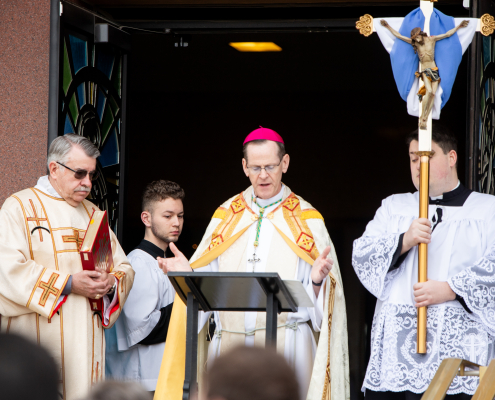 https://www.rapidcitydiocese.org/wp-content/uploads/2024/12/IMG_7433-scaled.jpg
1440
2560
Becky Berreth
https://www.rapidcitydiocese.org/wp-content/uploads/2022/02/WebHeader22-1.png
Becky Berreth2024-12-30 11:55:292025-01-10 10:19:06Opening Mass — Jubilee Year of Hope
https://www.rapidcitydiocese.org/wp-content/uploads/2024/12/IMG_7433-scaled.jpg
1440
2560
Becky Berreth
https://www.rapidcitydiocese.org/wp-content/uploads/2022/02/WebHeader22-1.png
Becky Berreth2024-12-30 11:55:292025-01-10 10:19:06Opening Mass — Jubilee Year of Hope